Six Colors
Six Colors

Apple, technology, and other stuff

This Week's Sponsor

Monologue: smart dictation and voice notes for Mac, iPhone, iPad, and Apple Watch.

By Jason Snell

One day with Fitness+

Apple’s latest service, Fitness+, arrived on Monday, and over the last 24 hours I’ve pedaled to 80s hits, jumped around my living room in an introductory high-intensity interval training (HIIT) workout, and added a set of new exercises to work my core.

I am literally sweating the details for you, dear reader.

More seriously, I’m probably in the best cardiovascular shape I’ve been in since I was a student. This isn’t saying much, but after a couple of failed attempts at it, I’ve been running regularly for most of this year. I am the proverbial Couch to 5K person, having run two (virtual, alas) 5K races in 2020.

It’s the Apple Watch and AirPods that have really done the job for me. As I detailed during one of my first attempts to run regularly, I’ve managed to find a happy place running with just my cellular watch and AirPods, listening to podcasts via the Overcast watch app. I used the Couch to 5K schedule in Intervals Pro to guide my workouts until they transformed into “just run for X minutes,” at which point I switched over to Apple’s own workout app. These days I generally just try to go out into my neighborhood for two-mile runs two or three times a week.

The last couple of months, it’s been two times a week a lot more often than three, so I’ve begun wondering if I might want to officially replace that third run with some other kind of exercise routine. I have an old stationary bike, but pedaling idly while streaming “Deep Space Nine” wasn’t as great as I had hoped.

Fortunately, I have the AppleOne bundle, which is already saving me money on my existing Apple stuff—and Fitness+ comes with the bundle, free! (This is an interesting potential future path for Apple’s services strategy—loading more ancillary services that are tightly integrated with Apple’s other products into its services bundle, and perhaps being a little less concerned about how they fare as a standalone offering.)

This is all to say that I spent half an hour this morning pedaling my ancient recumbent exercise bike to the hits of the ’80s while being motivated by an extremely chipper trainer who was once a contestant on “The Amazing Race,” and I kind of loved it. This will not be news to anyone who has taken a spinning class or has become One With The Peleton, but it actually helps to spend your time exercising with someone who can guide you, motivate you, and make your endless pedaling feel like something more than a monotonous grind!

The Apple Watch feedback helps a lot, too. The service requires you to have an Apple Watch, and is integrated deeply with it. Seeing my heart rate appear live in the Fitness app was not only motivational but helpful in regulating my pace and my bike’s resistance level, keeping myself in the appropriate zone for whatever portion of the workout we were doing.

That was a full 30-minute workout, after which I needed to shower and change. But on Monday night I did a couple quick introductory courses on Core and HIIT, just on my living room floor, and I came away with the same impressions: Apple Watch integration is great, and having a good trainer to motivate you makes all the difference.

I’m really impressed with the production values of Fitness+ video courses, too. Not only are the presenters polished and friendly—I think they’ve been getting the same training as Apple’s tech executives—but the whole thing exudes the aesthetic we’ve come to expect from Apple. The videos look great, with brilliant lighting and a gorgeous set of backgrounds inside the Fitness+ studio in Santa Monica. So much wood! So many smiling, sweaty people! (Okay, maybe the WWDC presenters don’t glisten so much.)

The service comes with a free one-month trial, so if you’re an Apple Watch owner, it’s worth giving it a look and seeing if it might work for you. It’s definitely not for everyone—and there are also plenty of competitors out there—but it feels like Apple has made a credible entry that has the potential to help a lot of people become more fit.

I’ve already been doing my part while jogging around my neighborhood listening to podcasts—but maybe pedaling to The Fixx and The Go Go’s could be a nice addition to my routine.



Microsoft Office embraces M1, Big Sur

On Tuesday Microsoft announced that it’s releasing new versions of Microsoft Office that run native on Apple Silicon:

The new Office apps are Universal, so they will continue to run great on Macs with Intel processors. The apps are not only speedy, but they also look fantastic as they have been redesigned to match the new look of macOS Big Sur.

If you have automatic updates turned on, you will start to receive these updates today. Otherwise, you can go to the Mac App Store and click the Updates tab, or with Microsoft AutoUpdate, you can go to your Office app’s Help menu and choose Check for Updates. Plus, find more commonly asked questions on our support page.

In other Office news, Outlook now supports iCloud accounts. Unfortunately, Teams isn’t yet native on Apple silicon, though Microsoft says it’s working on it.


There’s a lot of streaming-media news this week, as Warner Media faces intense criticism of its decision to move all its 2021 film releases to HBO Max, Apple faces criticism for killing a show based on Gawker, and Disney fires off its Death Star, unveiling a slate of originals that are likely to take Disney+ to the next level. Oh, and Apple announced a $550 pair of headphones!


By Jason Snell

20 Macs for 2020: #3 – Macintosh 128K

Note: This story has not been updated since 2020.


My friend John Siracusa is disappointed in me because I didn’t put the Macintosh 128K—the original Macintosh—at number one in this list of the 20 most notable Macs of all time.

I certainly considered it. The original Macintosh changed the computer world forever. Without its presence, this series couldn’t exist. It is a seminal product in the history of technology.

Putting it at number one felt a bit obvious, though. And there’s this: While it came first, it had a lot of drawbacks—so many, in fact, that it was revised within a year. It was a remarkable first attempt, but for my money the Mac didn’t really settle down as a platform until the Mac SE arrived in 1987.

But still, it was first. And that counts for a lot.

Continue reading “20 Macs for 2020: #3 – Macintosh 128K”…


By Dan Moren for Macworld

How Apple sweats the security details—and sometimes gets it wrong

When it comes to Apple differentiating itself from its Big Tech rivals, there’s one area in which the company has spent a lot of time touting its record: security and privacy. From the App Store to HomeKit, Apple talks a lot about making sure that your data stays yours.

This might seem like a no-brainer. After all, we trust our devices with the most intimate details of our lives and we live those lives increasingly online. But while we might think about very obvious places that security is important (like making strong passwords or using two-factor authentication), there are plenty of other ways that our private data can leak out.

Sometimes that means making smaller changes, ones that may not be as understandable or as easily explainable to the average user, but can have just as many significant benefits in the long run. Even just in the past year, Apple has made a few of these moves to help improve security in ways that you may not be thinking about—as well as one or two that haven’t quite managed to help in the way intended.

Continue reading on Macworld ↦


By Jason Snell

SwiftBar steps up to provide ambient data in the menu bar

Note: This story has not been updated since 2020.

SwiftBar lets you disable plugins without dragging files around.

One of my favorite features of iOS 14 is its support for home-screen widgets. They’re supported on macOS Big Sur, too, but I don’t bother with widgets there. That’s because there’s already a great place to display information, and it’s visible at all times: the menu bar.

In the past, I’ve used Mat Ryer’s BitBar to put all sorts of information in my menu bar, including the current temperature, air quality, and even live listeners to podcast streams. Unfortunately, it came to my attention a few months ago that Ryer had largely moved on from BitBar development, just as Big Sur arrived and caused a bunch of cosmetic issues. (A BitBar user contributed a quick fix.)

It’s a drag to see a utility you rely on fade away, but I’m happy to report that there’s a spiritual successor to BitBar, SwiftBar, in active development led by Alex Mazanov.

Now Playing, indoor and outdoor air quality, and temperature status.

SwiftBar is written in Swift—it’s in the name!—and aims to compatible with any BitBar plugins. (It worked with all the plug-ins for BitBar that I’d built.) And there are some nice additional features under development, including support for Apple’s SFSymbols icon library. SwiftBar also lets you activate and deactivate plugins from within its preferences window, rather than using the filesystem, which I appreciate.

There are lots of BitBar plugins out there, and if you know any scripting language (literally anything that can execute on macOS — mine use AppleScript, JavaScript, and PHP) you can write plugins yourself in no time.

I have come to rely on having little blobs of information available to me whenever I glance up to my Mac’s menu bar. Thanks to SwiftBar, I don’t need to even consider the prospect that I might have to give that up.


December 11, 2020

This episode might be overpriced.


Apple’s first attempt at the ultimate thin and light laptop was overpriced and underpowered. The second attempt resulted in the definitive Mac of the 2010s.


Our best apps and games of 2020, our ideal set of headphones, whether we’ll be trying out Apple Fitness+ when it ships, and our home theater set-ups.


Xbox cloud game streaming coming to iOS in 2021

Microsoft Gaming chief vice president Jerret West in a blog post:

In Spring 2021, we will take the next step in our journey to reach more players around the world by making cloud gaming as part of Xbox Game Pass Ultimate available on Windows PCs through the Xbox app and browser, and iOS devices through mobile web browser.

After having their cloud gaming attempts rebuffed by Apple due to App Store rules, Microsoft reputedly shifted their strategy to providing the service via the browser—it now officially launches next year. This follows similar end-runs by Google and Amazon with their Stadia and Luna services.

Of course, Microsoft also offers a game streaming option from a local console on your network, which you can do via the Xbox app on iOS. (The difference there primarily being it doesn’t necessarily require a monthly subscription fee of which Apple wants its cut.) So that’s not annoying at all.

Personally, I think this is an aberration that will in time end up with fully native iOS apps for game streaming services. Those services aren’t going away and, frankly, they’re only going to get more prominent in the next several years—the same way that streaming video and music has become a dominant form of consumption. Apple certainly doesn’t want its platform to be a second-class citizen in that regard.

The big question, though, will be how well these services perform in Safari, and whether they’re good enough.


By Jason Snell for Macworld

3 rules to understand Apple pricing

It’s as regular as the turning of the seasons. Apple announces a new product and then the complaints that it’s overpriced start rolling in.

Now, I’ll be the first to admit that selling a pair of headphones for $549 does seem a bit much. Will it succeed? That remains to be seen—and Apple sometimes does misjudge its prices, as happened with the original HomePod.

But in general, you should not be surprised about Apple selling a product for a high price. Apple’s pricing strategy shifts from product to product and from year to year, but it’s worth keeping in mind some basic rules of Apple pricing.

Continue reading on Macworld ↦


By Dan Moren

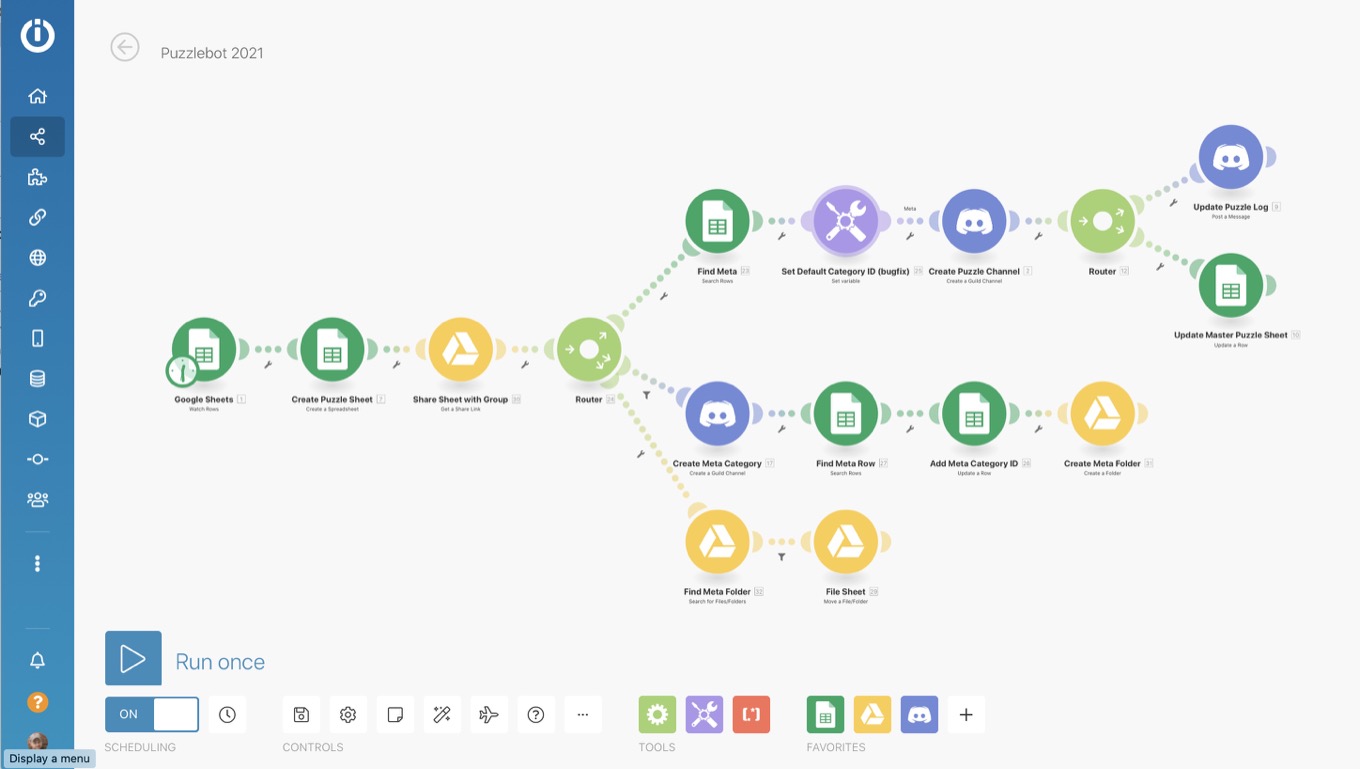
Integromat, for all your web-service workflow needs

The world is full of web services for all manner of tasks, but sometimes what you want to do is connect two (or more) services in order to complete a single task. What do you need for that? Another service, of course!

There’s no shortage of sites that offer this kind of ability: the first I recall was Yahoo! Pipes, though I’m sure there were other similar options even at the time. More recently, I’ve used sites like IFTTT and Zapier, but in the past few weeks, I’ve been playing with a new-to-me option that I find very impressive: Integromat.

Integromat
Integromat’s UI is easy to understand and navigate.

There are a few things that drew me to Integromat. For one, it seems to offer some integration capabilities that aren’t available on other platforms. For example, the project I was working on required me to interact with channels on a Discord server—a feature not offered by Zapier’s Discord integration. Integromat offered the options I was looking for, and a whole lot more—way more, in fact, than Zapier.

But the main thing that I really appreciate about Integromat is its interface. The layout is highly graphical, presenting each integration as a little bubble-like module. Click on any icon and you’ll get easy to read and understand parameters that you can quickly fill out. To connect that bubble to another task, just drag one of the handles on the side to the other module you’ve added and voilà!

Integromat Filter
Filtering makes your scenarios even more powerful.

Integromat also offers powerful features for flow control. So, for example, if your workflow has a branch that only needs to be completed in certain cases, it’s easy to set up a filter that checks for specific criteria and only executes if those are met.

There are also a ton of useful built-in programming-like features. I spent a while looking for a module that would convert a string to uppercase characters only to discover that I could put a conversion function right in the field that I wanted.

Integromat Functions
Built-in functions make Integromat’s modules even more powerful.

So far, I’ve only experimented with Integromat’s free plan, as I ramp up my workflow for actual use. I imagine I’ll need to sign up for at least a month’s worth of the paid plan, however, as I’m already approaching the limit on number of operations in a month. Which is one of the few downsides I’ve discovered so far with the service: depending on how complex your workflow is, it’s easy to end up using a lot of your quota—probably a testament to how simple it is to keep adding on to a workflow. That said, the service offers a very reasonable $9/month plan that should appease most casual users, as well as more expensive plans that are probably aimed more at business users.

I also ran into some problems with the Google Drive module Integromat offers: a new security process on Google’s side meant that I needed to jump through some hoops to access the API, something which took a little bit of know-how, although Integromat does walk you through the steps. (For some reason unknown to me, it seems as though Zapier’s integration with Google Drive doesn’t require this workaround at present; I’m not sure why.)

Overall, though, I’ve been very pleased with Integromat’s interface and performance. It seems pretty zippy, and I’ve rarely had anything fail to work (except, in the case of mistakes I mad myself); plus, I’ve barely scratched the surface of all that it has to offer. So if you’ve found yourself a little frustrated by IFTTT’s lack of power or Zapier’s cumbersome interface, maybe give Integromat a try.

[Dan Moren is the East Coast Bureau Chief of Six Colors, as well as an author, podcaster, and two-time Jeopardy! champion. You can find him on Mastodon at @dmoren@zeppelin.flights or reach him by email at dan@sixcolors.com. His next novel, the sci-fi adventure Eternity's Tomb, will be released in November 2026.]


Apple Fitness+ launches December 14

In addition to its new AirPods Max, Apple also announced on Tuesday that its new fitness service, Fitness+, will launch next week, on December 14.

First unveiled at Apple’s September event, Fitness+ provides a variety of workout videos with various trainers, and integrates with the both the Apple Watch—highlighting health data onscreen during relevant moments in the workout—and Apple Music. New content will be added every week, with a variety of session lengths, difficulty levels, and types of exercise.

Apple Fitness+ runs $9.99 per month or $79.99 per year in the U.S. and can be shared with up to six family members for that same price. (It’s also available in Australia, Canada, Ireland, New Zealand, and the UK.)

Existing Apple Watch users will get a free month, and customers who purchase a Series 3 or later will get three free months. It’s also available as part of the Apple One Premier bundle.


By Dan Moren

Apple introduces $549 AirPods Max over-the-ear headphones

Note: This story has not been updated since 2020.

AirPods Max
AirPods Max in green.

December surprise! As rumored, Apple had one more trick up its sleeve for the “year” that has been 2020. This morning the company announced its new AirPods Max headphones, a long-expected over-the-ear model that bring many of the features of its AirPods line.

Apple says that the new AirPods Max—which come in five colors1, including space gray, silver, sky blue, green, and pink—have a custom acoustic design and use the same H1 chips found in other AirPods models; each ear cup has one chip, and they both have 10 audio cores to power audio processing. Like the AirPods Pro, the Max have both Active Noise Cancelation and Transparency modes, as well as the new spatial audio introduced in iOS 14.

The ear cups are designed with memory foam to help seal in sound, and feature a mechanism to distribute ear cup pressure to fit one’s head. Inside each ear cup is a 40mm dynamic driver, with a “unique dual neodymium ring magnet” that Apple says helps maintain a distortion-free listening experience, even at high volumes. (Though no doubt audiophiles will make their own judgments when they arrive.)

Ah, but how will you control such a device? Well, look no further than the Apple Watch. The AirPods Max feature, yes, a Digital Crown, which you can use to control volume, as well as play/pause audio, skip tracks, answer and end phone calls, or, of course, activate Siri. There’s also a noise control button that can toggle between the ANC and Transparency modes.

Like the AirPods Pro, the setup of AirPods Max is done on your Apple device, and automatically pairs with all devices associated with your Apple ID. Optical and position sensors mean that playback automatically pauses if you lift one ear cup.

Apple also says that battery time is no slouch: the AirPods Max will provide 20 hours of audio playback, talk time, or movie playback with both ANC and spatial audio turned on.

The headphones also include a fascinating “soft” Smart Case, which puts AirPods Max into a low-power state when not in use. For charging, Apple uses a Lightning port (sorry USB-C fans) includes a Lightning-to-USB-C cable in the box, though, of course, no power brick.

All of this comes at a premium price, though. AirPods Max will cost $549, and are available to order today in the U.S. and more than 25 other countries and regions. They’ll start shipping on December 15.


  1. Yay, non-boring colors! These are almost the same as the new iPad Air, with the exception of pink instead of rose gold. 

[Dan Moren is the East Coast Bureau Chief of Six Colors, as well as an author, podcaster, and two-time Jeopardy! champion. You can find him on Mastodon at @dmoren@zeppelin.flights or reach him by email at dan@sixcolors.com. His next novel, the sci-fi adventure Eternity's Tomb, will be released in November 2026.]


Warner Media is moving all its 2021 releases to HBO Max, but what will that mean for the future of the movie industry? Will streaming reign supreme, or is there a future for movie theaters? Meanwhile, a new Bloomberg report gives some shape to the future of Apple’s M-series processors—it turns out the M stands for “more cores.”


Bloomberg: Apple silicon road map accelerates in 2021

Bloomberg’s Mark Gurman and Ian King on the Apple silicon beat:

The current M1 chip inherits a mobile-centric design built around four high-performance processing cores to accelerate tasks like video editing and four power-saving cores that can handle less intensive jobs like web browsing. For its next generation chip targeting MacBook Pro and iMac models, Apple is working on designs with as many as 16 power cores and four efficiency cores, the people said.

No surprises here. Of course Apple’s going to scale up the core count on its higher-end computers. The question is merely by how much?

For higher-end desktop computers, planned for later in 2021 and a new half-sized Mac Pro planned to launch by 2022, Apple is testing a chip design with as many as 32 high-performance cores.

Yeah, by about that much. At this point, Apple’s demonstrated that it has the know-how to build chips that outpace performance across much of the rest of the industry. The only thing limiting them now is A) how much money it wants to throw at improving its silicon and B) the limitations of physics. Given that the company is financially well positioned and custom silicon is now the technology underlying every single product it makes, the only real limitation is B.

Other interesting tidbits from Gurman and King’s report: more powerful graphics chips with 16 and 32 core chips are in development, and those might eventually scale up as high as 128 cores, which has the possibility of providing truly impressive graphics performance. (The current M1 chips mostly have 8 cores in their GPUs.) And, of course, the above mention again of a “half-sized Mac Pro”.

Apple said it expected its transition to custom silicon to take two years, but there’s some wiggle room in there—two years from the announcement in June 2020? Two years from the launch of the first M1 Macs? Or just two calendar years? Regardless, we can clearly expect to see some significant new Apple silicon chips powering Macs next year, and those who are worried that the M1 was the height of Apple’s processor prowess should probably wait until the movie’s over before rendering a verdict.


By Jason Snell

20 Macs for 2020: #4 – MacBook Air (2nd generation)

Note: This story has not been updated since 2020.

Apple’s first attempt at the thin, light laptop of the future happened a couple of years too soon.

In early 2008, Apple introduced the original MacBook Air, a deeply compromised product. It was expensive (the base price was $1799), yet also the slowest Mac, sporting a pokey iPod-class hard drive. (A 64GB solid-state drive, a first on a Mac, was offered as an option—but at $999, it was eye-meltingly expensive.) The Air didn’t have an optical drive or FireWire port or Ethernet jack, just a single USB port hidden behind an awkward drop-down door. Its cooling system was so inadequate that the Air’s dual-core processor would stop working effectively in a warm room.1

The original Air’s weird drop-down door.

Its advantages were clear, though. The MacBook Air weighed only three pounds. That made it a full two pounds (40 percent!) lighter than the next-lightest Mac laptop sold at the time, and more than a pound lighter than any previous Mac laptop. And it was impossibly thin, a 0.16 inch wedge at the front widening out to 0.76 inches in the rear. In other words, the original Air’s heart was in the right place—but the technology just wasn’t good enough yet.

Two years later, Apple took another swing, and this time they got it right. The new MacBook Air resided at the bottom of Apple’s laptop price list rather than the top—thereby ensuring it would be the laptop of choice for most people. The new model kept the thinness and lightness of its predecessor, but offered a full array of ports and a perfectly capable Intel processor.

And perhaps best of all, it came in two different versions—a 13-inch model that was roughly the size of the original model, and a tiny 11-inch model for people who wanted the absolute smallest Mac laptop in existence.

The future of notebooks?

“It’s like nothing we’ve ever created before,”2 Apple CEO Steve Jobs said when introducing the new MacBook Air models. “We think it’s the future of notebooks.” Apple often proclaims that it’s creating the future. Rarely has it been as right.

Netbooks had cramped keyboards.

Just before the advent of the MacBook Air, many PC makers were creating Netbooks, a category of ultra-cheap ($200-$300!), ultra-small laptops that ran Windows and were powered by new, low-end Intel processors. Apple execs were constantly asked why the company wasn’t making a Netbook.

Sometimes I suspect that people lobby for Apple to enter a product category because the rest of the technology industry knows it hasn’t cracked the problem, and it’s hoping Apple will. As someone who tried out a couple of Netbooks during this period, I can attest to how lousy they were. They were impressive in a sort of novel, “can-you-believe-this-runs-Windows” kind of way, but they were cheap plastic garbage with shrunken-down keyboards that were impossible to type on.

In designing the 11-inch MacBook Air, Apple discovered a bright line that it would not cross: the size of the keyboard. The 11-inch Air was built around its full-sized keyboard, every key the same size as you’d find on other Apple laptops, desktop Macs, and pretty much any keyboard in existence. Apple would get this small, but no smaller. And of course, the MacBook Airs didn’t feel cheap, thanks to their anodized aluminum shells, machined out of individual pieces of metal.

The PC industry thanked Apple for its answer, and Intel promptly introduced the concept of Ultrabooks. An Ultrabook is best defined as a PC laptop that looks like a MacBook Air. (As for Apple, its other answer to Netbooks was the iPad, released a few months before the MacBook Air in 2010. Between the iPad and the MacBook Air, Apple had two very different responses to the same desire for a smaller, cheaper mobile computing device.)

As the decade wore on, every other laptop (including Apple’s other offerings) seemed to become more and more like the MacBook Air. The MacBook Pro shed its optical drive, switched to SSDs for storage, and got thinner and lighter. Today’s 13-inch MacBook Pro is itself a thin, light three-pound laptop.

Too popular to be killed

In 2018, Apple stopped trying to kill the Air and rebooted it.

As the decade went on, the MacBook Air kept getting better. Even with its thin profile and limited cooling system, it managed to add more robust processors as configurable options. An 11-inch MacBook Air with an Intel i7 processor could handle almost anything you could throw at it.

The biggest crisis in the MacBook Air’s lifespan came mid-decade, and the threat came from Apple itself. In 2015, Apple introduced the 12-inch MacBook, which was thinner and lighter than the Air, with a Retina display—but also $300 more expensive. A 13-inch MacBook Pro followed in 2016, clearly following in the MacBook Air’s footsteps—but its initial price was $500 more than the Air’s!

Still, the non-Retina MacBook Air just kept selling. It turns out that Apple’s customers felt it was a better value even without that shiny Retina display. In 2018, Apple relented and released a Retina Air. When Apple recently released the first MacBook Air based on its own processors, the company confirmed what we all suspected—that the MacBook Air is the company’s best-selling Mac3. (In all likelihood, that’s been true for most of the last decade.)

I think what made the Air so popular was that it offered the general public a computer that had exactly enough to do what was needed, and nothing more. Early in its life, computer nerds could complain about its scant storage, RAM limitations, lower-powered processors, lack of ports (Thunderbolt was added in an update), and requirement for an external optical drive if you wanted to use CDs or DVDs. But if you just wanted a thin, light, low-cost laptop to do email and look at the web and maybe work in Microsoft Office, you didn’t need any of that.

As the decade wore on, all those distinctions faded away, but I think the core appeal of the Air remained: It was Apple’s cheapest laptop, and compared to the thicker MacBook Pros, the thin wedge shape of the Air just seemed smaller and lighter and… less. With the Air, less is more.4

MacBook Air forever?

The M1 MacBook Air.

At this point, it’s hard to see the MacBook Air exiting the Apple product line any time soon. Apple presumably has learned a lesson from all its attempts to kill it, realizing that the Air’s design and price is what most of its customers want from a laptop.

I certainly agree. I’ve been using a MacBook Air as my laptop (and in many cases, my primary computer) since that original model came out in 2008. The 11-inch Air was my primary Mac from the day it shipped until my last day at Macworld, and I only replaced that final one last month, when I bought a new M1 MacBook Air.5

In the meantime, the rest of Apple’s laptops have caught up with the Air. Sure, there are differences—the Touch Bar, larger screen options, and (presumably) more powerful models yet to come. But major differences, like big hard drives and optical storage and the like, have all melted away. One look at the recently-announced M1 MacBook Pro and M1 MacBook Air make the challenge clear. The differences between these computers are subtle ones.

Now the big question. What’s next? The MacBook Air, released in 2010, really did define laptops for the rest of the decade. But it’s 2020 now. What will be the definitive mobile Mac of the 2020s? The MacBook Air may keep kicking around for a while, but what will replace it in the hearts and minds of users?

Apple’s approach to laptops has changed very little in the last decade, if not the past two—since the the Titanium PowerBook G4 hit the scene. While its competitors in the PC laptop world have experimented with touchscreens, keyboards that detach or fold away, and folding screens, Apple has resolutely stuck with the aluminum shell and two perpendicular planes—one for input, one for display.

If Apple is to redefine the laptop for the next decade, we’d all do well to remember the lesson of the MacBook Air. Sometimes, you don’t get it right on the first try—and that’s okay. Given a couple of years to learn those lessons, Apple ended up creating the greatest laptop design of all time. I look forward to seeing its next attempt to unveil the future of notebooks.

I’ll be back next week with number three.


  1. Trust me on this—I had one. I worked in an office with large west-facing windows, and in the late afternoon the MacBook Air slowed to a crawl. 
  2. Except the iPad. This is the event where Jobs asked the question, “What would happen if a MacBook and an iPad hooked up?” 
  3. This is the culmination of another trend—the overall shift from desktops to laptops. The MacBook Air is not just the decade’s definite laptop, it’s the definitive Mac of the 2010s. 
  4. The Touch Bar on the MacBook Pro is just another example of a fancy extra feature that most Air buyers don’t see as necessary. 
  5. My wife and two children also have their own Retina MacBook Airs. We know what we like in this family. 

By Dan Moren for Macworld

Apple’s App Store: What its priorities should be for 2021

As 2021 peeks its head over the horizon (and with it, hopefully, an upward swing at last), it’s time to cast our glances to the year ahead.

While Apple has no shortage of priorities for the next 12 months, one area that seems as though it might get more attention than usual is the company’s main digital storefront, the App Store. Services continue to be good business for Apple, and the App Store is a major component of that market, but it’s also not without its challenges.

Apple has already instituted some changes to its long-running App Store practices, and recent developments have also made it clear that further changes are likely on the way. So what do we have to look forward to in 2021?

Continue reading on Macworld ↦


By Jason Snell

Fun with Charts: Imagining the M2 processor

Note: This story has not been updated since 2020.

The pace of Apple’s processor development can be measured in all sorts of ways. The chart I built today is using only a single measurement, that of multi-core performance as measured by the speed-testing tool Geekbench. It doesn’t take into account all sorts of other ways that Apple boosts performance in its chips between generations. Since Apple introduced the iPad-focused X variant processor with the A8X in 2014, it has boosted clock speed, subtracted and added processor cores, split its processor cores into separate performance- and efficiency-focused cores, built a multi-core GPU, added a multi-core Neural Engine, and a whole lot more.

However, at least when it comes to raw multi-core CPU performance, the X-series chip generations Apple has released since the A9X arrived with the first iPad Pro in November of 2015 have progressed at a remarkably consistent rate. (For the purposes of this chart, I’m considering the M1 a proxy for an “A14X” processor, since it seems to be an evolution of the X-series chips.)

Apple chip trend chart

Apple skipped the A11 and A13 generations when it came to a higher-powered, iPad-class processor, but by taking avantage of a two-years-improved architecture, the growth in performance proceeds apace. If you want to think of it this way, Apple’s X-series chips are gaining about 1200 points in Geekbench multi-core scores every year.

For the sake of this exercise, then, let’s assume that next fall Apple releases an M2 processor that follows this same trend. It would score about 8500, roughly 16 percent faster than the M1 Macs currently being sold.1

Assuming that an M2 processor would be used in low-end Macs like the M1, it would mean that an M2 MacBook or Mac mini would be faster than all but one Intel Core-based Mac, the current high-end i9 5K iMac. Only the Xeon-based Mac Pro and iMac Pro models, with 10 or more cores, would best that score.

There are so many questions yet to be answered, including:

  • Is there a variation of the M1 processor waiting in the wings for sometime in 2021, or will all the Macs that ship in the next 10 months be using the same M1 processor in the three current Apple silicon Macs?
  • Will Apple really release an M2 processor next year, or will the company approach Mac chip design similarly to how it approaches iPhone and iPad design? I could see a scenario where 2021’s Mac release is a chip with more processor cores and capabilities that’s rolled into higher-end laptops and desktops, while the M1 continues motoring along until 2022.

  • Would that theoretical 2021 chip be an “M1X” or an M2? Does the M-series numbering move in lockstep with Apple’s A-series chips, or do they move on a different cycle?

So many questions, so few answers. But the most boring, conservative M2 update in 2021—one that takes advantage of the A15 chip development cycle to create a new chip for lower-end Macs—would be at least 16 percent faster. Anything else Apple does—boosting the number of CPU cores seems like a real possibility—would just boost the number from there.

I can’t wait to see what 2021 brings for the Mac and for Apple silicon. It’s shaping up to the most interesting year in the Mac in ages.


  1. I made a bunch of other wacky calculations, including score improvement per year per performance core, while working on this story. (Fun?) 


Search Six Colors