

By Jason Snell
Is Apple coming home to stay?
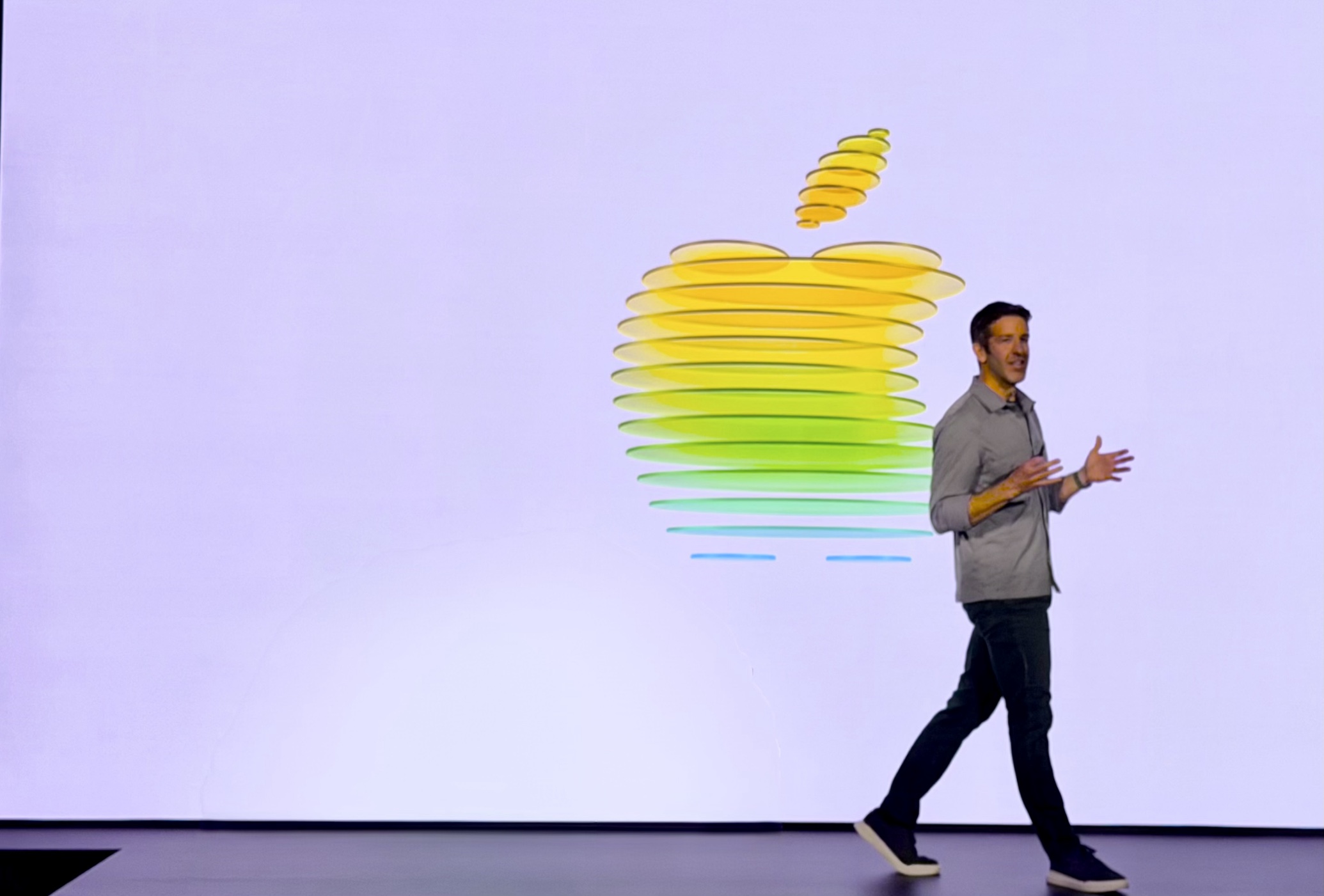
The announcement that Apple’s making a home-related announcement on Tuesday was hardly unexpected. Most things Apple does these days are reported in advance, usually by Bloomberg’s Mark Gurman.
But this event has been years in the making. Gurman first reported on the centerpiece product two years ago:
Apple… is nearing the launch of a new product category: a wall-mounted display that can control appliances, handle videoconferencing and use AI to navigate apps…. The company is gearing up to announce the device as early as March and will position it as a command center for the home, according to people with knowledge of the effort. The product, code-named J490, also will spotlight the new Apple Intelligence AI platform, said the people, who asked not to be identified because the work is confidential.
J490 did not, in fact, ship in March of 2025. The failed Apple Intelligence roll-out meant that the company had to push back the release of its AI-powered home products until after it could fix its AI issues and launch Siri AI last month.
It’s been a long time coming. Apple has made some runs at addressing the smart-home market in the past, but it’s never seemed to be part of a coherent, consistent strategy. (Many of us still can’t forgive it for abandoning the AirPort product line just as the advent of mesh networking would have provided the company opportunities that ended up accruing to companies like Eero, now a part of Amazon.)
Perhaps in new CEO John Ternus, Apple really does have a powerful internal advocate for the smart home. In a funny twist of fate, Apple’s intransigence in this category hasn’t really harmed its chances. Amazon and Google have been selling products similar to J490—touchscreen voice assistant home hubs—for years now, but they have failed to catch fire. I’ve used multiple Echo Shows and Google Nest Hubs in my kitchen over the years, and they have all been various degrees of terrible.
More broadly, the entire smart home market has suffered from fragmentation and mediocrity. Early devices were expensive, unreliable, and impractical. Things have gradually improved, and the tech giants have reached a detente that has made everything more interoperable. But even so, it’s really only this year that (for example) I feel like the smart lock has reached a level of tech capability that allows it to fulfill its promise, thanks to UWB support.
So is there a universe in which Apple rolls into this category at this late date and actually finds success where others have struggled to get traction? I’m not saying it’s a likely scenario, but it’s certainly possible. Apple’s track record with prioritizing user security and privacy is certainly an asset for anyone considering adding tech devices (especially ones with sensors) to their personal spaces. Apple’s tight device integration could also be a strong selling point for the many users who are fully bought in to the ecosystem.
So I’m saying there’s a chance.
The future of home is widgets?
The more I think about J490 or the HomePad or whatever it will ultimately be called—my money’s still on something with the HomePod name, possibly even just HomePod—the more I feel like it will expose Apple’s current thinking about the role of apps on its platforms. (Kind of an important topic.)
The wild success of the iOS App Store starting in 2009 transformed how Apple viewed the role of software in its operating system. Handed a big hammer, Apple saw nails everywhere. The Mac got an App Store, which exists, but I think nobody would consider a hit. The Apple Watch got an App Store, which also exists but seems kind of pointless. Messages got an App Store, which also exists, much to my surprise. And of course, tvOS was revamped under the premise that “the future of TV is apps,” but that future never really arrived.
Perhaps Apple has taken notice that the everything-has-an-App-Store strategy is really showing diminishing returns. The problem is, what do you do with a device like this forthcoming touchscreen? It doesn’t run iOS or tvOS, but apparently yet another variant of Apple’s omni-OS foundation. If it supports playing video from Apple TV but not Netflix, or podcasts from Apple Podcasts but not Overcast, or music from Apple Music but not Spotify, that’ll be frustrating. And the strength of the iPhone app ecosystem is one of Apple’s greatest assets.
So what’s Apple to do? My best guess is that it’s going to use some technology we’ve already seen to let your apps peek through on this new device from your iPhone. macOS 26 introduced the ability to display widgets and receive notifications directly from your iPhone—a feature that, given the timing, might actually have been invented for this as-yet-unreleased device!
In the long run, I wonder if the answer on devices that are ancillary to the iPhone—and I’ll throw the Apple Watch in here, too, since it already does this—is to allow app developers to include apps for alternate Apple platforms along with their existing App Store apps. You don’t actually need to use the watchOS App Store to download Apple Watch apps—you just get the iPhone app and your iPhone installs the app on your watch. If Apple wants real apps running on its smart home devices, perhaps they just transfer over from your iPhone.
In the meantime, projecting widgets doesn’t seem like a bad compromise to make the home hub more personal without requiring yet another App Store and all that complexity.
Of course, the next problem this product will face is that, as a device that sits in a home, it is probably going to need to interact with more than a single user. Beyond the Mac, Apple has struggled with the concept of multiple people using a single device. You can do it on Apple TV, but it’s not a great experience. You can do it, sort of, on HomePods. But if Apple is going to tie in the contents of a user’s iPhone with this home hub, it needs the device to be able to shift context on the fly and display content from a particular person’s iPhone, or (in the case of children or guests) someone without a paired iPhone at all.
Tricky stuff, and not a place where Apple has a great track record. Gurman’s reports suggest Apple is going to try a form of face recognition (that’s sub-Face ID level, but that’s probably okay for something found inside a home) in order to determine the context of which person is interacting with the device. We’ll see how it goes, and how responsive it can be if it’s got to connect to an iPhone and display widgets or load other personal data.
The Siri AI question
Then there’s the feature that has made these products all wait for their moment in the sun: Apple Intelligence. Apple has been slow to roll out iOS 27, probably to limit a surge of use of Siri AI on Apple’s servers. Numerous people have reported that Siri AI feels a little slower now than it did this summer, when the user base was smaller.
These products—not just the home hub, but next-generation HomePod mini speakers—will live or die with the functionality of Apple’s voice assistant. I’ve found Siri AI to be a pleasant surprise, an entirely functional voice assistant that replaced an entirely dysfunctional one. But if it fails me on my iPhone or iPad, I can just do things myself. That’s a lot less true on a device that’s meant to use voice as its primary interaction mode. Apple needs to get this right.
The rest of the story
Finally, there’s the question of how Apple will approach the entire smart home ecosystem. What product categories are worthy of Apple’s own brand name, and what ones can be served by preferred partners?
Gurman’s report this week that Apple is working with LG to build a smart lock and a series of security cameras, starts to answer that question. At least for now, it seems that Apple is going to approach this with three tiers: a few Apple-built products (home hub, speakers, TV box), some “second-party” products built in collaboration with Apple but released by LG and possibly others (cameras, lock), and presumably other Matter and Apple Home certified products that will receive Apple’s attention, promotion, and Apple Store placement.
I do wonder how Apple will make its decisions about what products it will decide to build itself. Will it go this far, but no further? Or do its LG collaborations give it time to figure out what categories could use a little bit of Apple magic? (Once again, I am imploring Apple to consider bringing back AirPort.)
That said, I’ve got a couple of Aqara 4K security cameras that work great, and the Aqara and Schlage UWB locks are pretty great. Apple doesn’t need to build products in new categories if other companies are making products that meet Apple’s standards. And maybe it’s hoping that its own moves here will set a direction and encourage further investment, so Apple doesn’t have to do everything itself.
After years of Apple never engaging with the smart home category for very long, this is an opportunity for a reset. What Apple announces on Tuesday will be a good start, but we’ve seen good starts from Apple before. It needs to keep its eye on the category, keep shipping new products, and continually improve its home software. If this is just a short-term lease, it’ll be pointless. Apple needs to get a mortgage and settle into its new home.
If you appreciate articles like this one, support us by becoming a Six Colors subscriber. Subscribers get access to an exclusive podcast, members-only stories, and a special community.