Six Colors
Six Colors

Apple, technology, and other stuff

Become a Member!

Become a Six Colors member to read exclusive posts, get our weekly podcast and regular newsletters, and much more!

Laptops, betas, AI, and e-readers

Dan’s laptop is back and his loaner is in beta land; get ready for a few years of Apple Intelligence confusion; and the current state of e-readers.


Apple’s Vision platform needs to do more than get cheaper

Note: This story has not been updated since 2024.

Meta Quest 2 controllers

The Vision Pro isn’t a product many people should buy today, and that’s not really surprising. It’s an example of Apple playing a long game, trying to build a wearable computing platform over many years. You have to start somewhere.

Right now, it’s a development kit for developers who are willing to gamble or experiment with a platform that’s not going to be broadly adopted for a while, if ever. It’s a pretty intriguing niche entertainment product, but it’s desperately in need of more content. And it’s a productivity product for people with very specific use cases and work methods. Still, most people should not consider buying one—especially not at $3500—and most people are definitely not!

But at some point, long game or not, Apple needs to start progressing and growing the visionOS platform. Mark Gurman’s report that Apple is working on a $1500 model for late next year is a start. $1500 isn’t cheap, but it’s less than half the price of the current model, and therefore more likely to snag curious people and improve the viability of buying one just to watch immersive events or 3-D videos or whatever.

So, not cheap, but… cheaper. And that’s a good start. Right now, the high price of the product is the top gating factor in growing the platform. Even if you’re impressed by the demo, it’s hard to get over that price tag.

But price isn’t the platform’s only challenge. The lack of software and content is also huge. If there’s a cheaper Vision product coming in late 2025, that means Apple has a year and a half to beef up what’s available on visionOS so that it can put itself in the best position to grow the platform when the lower-cost model is released.

The Vision Pro is the result of a years-long development process, which means that the current product as shipped is the outcome of Apple’s initial thinking about the device. Presumably, the people working on Vision Pro have learned a lot, both during the final years of the project and in its first few months out in the real world.

That’s good, because it’s time to reconsider some of the early decisions about the product and the platform. Obviously, this is already being done, because there’s no way that Apple can make a $1500 headset without pulling out some “must-have” features. (The obvious one is the lenticular outward-facing display, but I’m sure there are other features that seemed incredibly important that, in hindsight, are wastes of money.)

On the entertainment front, Apple’s made some strides in at least announcing partnerships with makers of hardware that can shoot in 3D and Immersive formats. But it needs to invest more in getting developers to build their apps on visionOS, and since the size of the near-term market opportunity sure won’t, some other inducement—like maybe even money?—might be a good idea.

And if Apple wants to get serious about expanding and growing the Vision product line, it needs to get over one particular choice it made in launching it. The company was clearly so proud of its advanced hand-tracking interface that it shipped the Vision Pro with no additional input devices. And I get it! “If you see hand controllers, they blew it” could have been one of the catchphrases of the Vision Pro development process. A headset shouldn’t require add-on controllers to be usable.

But just as the Mac eventually got arrow keys (despite omitting them from the first Mac keyboard to encourage using the mouse) and the iPad got an Apple Pencil (despite being a touch-first interface), it’s time for Apple to get over itself, and either build precision hand controllers for visionOS or build an API and make a partnership with a third-party accessory developer.

The fact is, lots of games and game-adjacent apps require a level of precision that Apple’s (excellent) hand tracking just can’t muster. Every Vision Pro game I’ve played that featured hand tracking has been a sloppy mess. I get that Apple wanted to show off its hand tracking and lean into “spatial computing” to send the message that the Vision Pro is not a game console but a serious device, but in doing so, it turned its back on the most popular category of entertainment software in the entire VR headset category.

One way for Apple to entice people to the visionOS platform—especially if a much cheaper model is on the way—is to load up on entertainment content. 3-D movies and immersive video are great, and if Apple’s not trying very hard to cut deals and encourage more content that shines on Vision Pro, it’s going to have wasted all of its effort. But if the platform can play games, if developers can port their games to visionOS from other VR platforms, it increases the viability of the product.

I’ve got a Vision Pro and a Meta Quest 3. And yet the Quest 3, which costs about one-seventh of the price of the Vision Pro, is a vastly superior platform when it comes to playing certain kinds of games. Games just require precision positioning (through detailed movement tracking), and input (via on-controller buttons) that waving your hands and tapping fingers together in Vision Pro just can’t match.

So, does Apple want visionOS to succeed or not? If it does, it needs to build or support hand controllers by the time a cheaper visionOS device ships. It needs to fill the platform with fun, fast-twitch games, exercise apps, and other stuff that’s proven successful elsewhere. No, the Vision Pro is not a games console. But if it stands defiantly against that kind of use case out of some sort of dogmatic opposition, Apple will have made it that much harder for an already hard-to-sell platform to succeed.


Reliable features of voice-based virtual assistants, our hypothetical U.S. internet legislation, the impact of Apple’s new Passwords app on our password management, and our comfort level with sharing intimate thoughts with an LLM.


Review: Moaan InkPalm Plus is weird, cheap, small, and my kind of e-reader

Note: This story has not been updated since 2024.

The Moaan InkPalm Plus and the Kobo Clara HD
The Moaan InkPalm Plus and the Kobo Clara HD.

It is probably not surprising that I, John Moltz, the world’s leading iPhone mini superfan would also want to use a small e-reader. That’s just science.

After spending years reading ebooks on my iPhones and iPads like an animal, I finally got a Kobo Clara HD three years ago. And I really like it. It’s reasonably small, reasonably priced, has a nice screen, and it helped me reduce my crippling dependency on Amazon.

So, why did I think I needed another e-reader? Because they started making even smaller ones.

So buttons

Last fall Jason reviewed the Boox Palma, a phone-sized e-reader that looked right up my alley. Not only would it be easy to hold with one hand, it also had physical navigation buttons, something my Kobo, like most of the smaller and more inexpensive readers, lacked. The problem is that it costs $280. I said up my alley, not up my gated community. It’s not an unreasonable amount, it was just more than I wanted to spend since I already had an e-reader. Nothing to do but wait for prices to come down, I guess.

Or maybe I didn’t have to wait. A post on Mastodon got boosted into my feed that touted the Xiaomi Moaan InkPalm 5 which sells for about $95. Now you’re talking my kind of cheap. Looking into the Moaan lineup, I then found the InkPalm Plus which features a slightly larger screen, more storage and a more up-to-date version of Android, all for as low as $124 on AliExpress.

Sold.

Continue reading “Review: Moaan InkPalm Plus is weird, cheap, small, and my kind of e-reader”…


Is an Apple Vision SE the key to spatial computing’s success?

Though Apple Intelligence may have taken the spotlight at this month’s Worldwide Developers Conference keynote, Apple’s big announcement of last year has not been completely forgotten. The company also debuted visionOS 2 with some important features lacking from the first release, as well as announcing the spatial computer’s imminent availability in several international markets.

But both of those may have been temporarily overshadowed by a recent report that the company is currently focusing its efforts on a less expensive version of the product—note that I didn’t say “cheap”, as the rumored price tag is still in the $1500 range, making it more economical only by comparison to the $3500 Vision Pro.

Prioritizing such a device over the Vision Pro 2 makes a lot of sense: the Vision Pro, by all accounts, was cutting-edge technology that was as good a product as Apple could make. As it is, it should continue to be very capable for several years—and I’m sure few of the early adopters would be happy to see their very expensive spatial computer superseded in short order. But such a strategy also raises questions about the future of the Vision line and what exactly Apple is planning for it.

Continue reading on Macworld ↦


Rounding up Bartender alternatives

I’ve been meaning to write up a comparison of menu bar utilities in the wake of Bartender being sold, but Niléane beat me to it:

If your trust in Bartender has wavered as a result of this series of events, you may be looking for alternatives. I have been, too. So, I’ve rounded up some of my favorite menu bar management utilities available right now and even a couple of macOS tips to help manage the menu bar without having to install any third-party apps at all.

I’ve been using Hidden Bar on my laptop without issue, but admit to being intrigued by Ice as well. Also don’t miss her article’s tips to compact your menu bar… because you might not need a menu-bar manager at all!


Preparing for the era of orchestrated apps

Note: This story has not been updated since 2024.

App Intents
Apple’s App Intents slide from WWDC 2024.

It’s going to be years before we can really see the impact of Apple embracing systemwide AI features via Apple Intelligence. Many of the features announced at WWDC 2024 won’t even ship until next year, and the keynote’s Siri segment alone was so full of future-tense descriptions and metaphors about the beginning of a journey that it’s quite clear this is going to take some time.

But let’s try to look out into the future. Let’s consider what the iPhone, in particular, might look like once Siri gets smart and Apple Intelligence takes hold. It’s a future that may dramatically change what we think of as apps—and that holds some serious threats (as well as opportunities) for app developers.

Tuning the orchestra

Over the next few years you’re going to be hearing a lot more about a concept that Apple started to discuss at WWDC this year: orchestration. Broadly, the idea is that the machine-learning models on your Apple devices are going to be able to understand what you want to do, based on your commands and current context, and make it happen by using the combined resources of your device’s system software and third-party apps.

When everything is orchestrated properly, all the capabilities of all your apps are put into a big soup, and the AI system at the heart of your device can choose the right capabilities to do what you need it to do—without you having to specify all the steps it needs to take to get there.

This is, in many ways, the ultimate promise of user automation. For years I’ve been a fan of tools that let users create scripts or automations or workflows that connect up different aspects of their computing lives in order to save time and end busywork. Computers have eliminated countless sorts of drudgery, but if you use a computer every day, you probably still frequently find yourself doing some 21st-century drudgery, pasting this thing over here, clicking that thing over there, often in a mindless, repetitive sequence.

I can automate you out of that with some combination of AppleScript or Shortcuts or Keyboard Maestro or shell script or some other macro language… and I have done so for myself, friends, and family. But the truth is, most people are never going to build even a simple Shortcut for themselves.

But… what if they don’t have to? In a world of properly orchestrated apps, they wouldn’t. They’d just say what they wanted, and their device would do all the work. If they needed to do the same task repeatedly, they could just tell Siri that, and at that point, you’ve basically built an automation workflow in zero steps.

That’s the holy grail of user automation, honestly. Tell your device what to do, and it does it—you don’t need to be involved at all. The drudgery evaporates. How civilized.

Intents and purposes

Okay, so the automation utopia may be upon us soon. But it’s easier said than done, and that’s because the functions in our apps on all our devices aren’t all magically known to Siri and Apple Intelligence. App developers have to specifically mark out the key functionality of their apps and bundle it up in a specific way so that it’s accessible to the broader system.

This is how AppleScript worked back in the day, and in today’s Shortcuts era, it’s enabled by something called App Intents. App Intents aren’t new—as I said, they’re what powers Shortcuts—but as of 2024, they’re much more meaningful than they used to be, because they’re how apps integrate with Apple Intelligence.

What Apple’s asking app developers to do is put in extra work in order to allow their apps to offer up their unique functionality to the system in an organized way. The result will be that the system will know those capabilities exist and will be able to use them as needed, based on whatever the user wants to do. If I’m looking at a photo and say I want to share that with Myke and Stephen in Slack, Apple Intelligence needs to understand what I’m looking at, export that photo in a format that’s reasonable for sharing in Slack, and then use Slack to choose the right venue for me to share with Stephen and Myke. (Oh, and based on context it also needs to intuit that I mean Stephen Hackett and Myke Hurley—two people who are frequently connected—and not people I know separately like Steven Schapansky and Mike Gordon.)

It’s all tricky, but the potential is enormous. Apps are mostly islands unto themselves, and it can be a real effort to get them to work together the way you want them to. I once built a wild system that basically connected my email client to a database1—the apps didn’t know about each other, and they didn’t need to—but by connecting them, I got a huge productivity boost. With Apple Intelligence and App Intents (so many AIs!), the potential is there for your device to connect your apps with one another in all sorts of ways… without you even breaking a sweat.

The potential here is huge. Now, the big question: Will app developers buy in?

App self-esteem

On a device operated by Apple Intelligence and full of apps all tricked out with App Intents, what does “using an app” mean, anyway? I’m dubious that we’re not going to ever want to scroll through lists and tap things and perform other tactile acts on our phones, even if we can drive a lot of work with a voice assistant. But if you’re an app developer, there’s a real risk of feeling like your app is no longer a destination for users but a box of parts that will occasionally be rummaged through by the system while it’s passing through to a different destination. That’s scary.

I do think that if Apple’s idea of an orchestrated future comes into being, the importance of any individual app might be reduced. But there’s also huge potential here for different apps to work together, for them to amplify each other so that they’re far more important for individual users than they could possibly be now.

For some apps, though, the future might be more about supplying great actions and data sources to the big Apple Intelligence soup—presumably for a subscription price. It seems a little bit weird, but the future of iOS apps might be services that just tie into Apple Intelligence, with little to no interface of their own. I don’t know if you could even call them apps.

That’s all years away, but I think it’s already time for app developers to consider what makes their apps unique and useful in a world where a smart machine-learning model is taking user commands and then getting results. If competitors offer the same functionality, they should presumably be motivated to offer App Intents so that the system will use them, and they’ll become crucial, irreplaceable portions of a user’s workflow.

For some apps, that might mean becoming less of a bright, shiny interface in the face of users, and more of a behind-the-scenes workhorse that just makes life better. Developers who are used to having the spotlight may be disquieted by that notion, but it doesn’t mean that their software doesn’t have value—and won’t be able to command an appropriate subscription price.

Existential threats

Apps and the App Store have been very, very good for Apple. I’m sure the company wants that to continue for as close to forever as possible.

But if the future of the devices that keep Apple in business is about to be transformed by AI models that orchestrate our software to do our bidding, there’s a serious risk that it could disrupt Apple’s standing in all of those device categories. That’s why the rise of AI is clearly an existential threat for Apple and why the company spent so much time talking about AI features at WWDC 2024.

It’s worth keeping that fundamental existential threat in mind. While it’s easy to say that apps and the App Store helped make Apple what it is, and therefore, the company will always be inclined to maintain the status quo… the fact is that if Apple thinks the best way for it to survive and flourish is to atomize app functionality into App Intents and drive it all with a user-driven AI assistant, it’ll do that. And it won’t think twice about it, no matter the consequences for app developers.


  1. Because it was the 90s, it was an AppleScript that connected Eudora and FileMaker Pro. ↩

Apple backs away from some financial services and changes its Vision hardware approach, and there’s a new phase in the company’s relationship with the EU. For the Summer of Fun, we look at our current iPhone home screens.


Preliminary ruling from the EC declares Apple is violating the DMA

The European Commission has issued a preliminary ruling in one of its DMA non-compliance investigations launched in March:

Today, the European Commission has informed Apple of its preliminary view that its App Store rules are in breach of the Digital Markets Act (DMA), as they prevent app developers from freely steering consumers to alternative channels for offers and content.

At the root of this decision is the EC’s contention that Apple is overly limiting the way developers are allowed to send potential customers to their own storefronts. That includes both the actual design restrictions of external links, as well as Apple’s fee structure (the company takes a cut of any digital good or service up to seven days after the customer follows the external link). Such moves would seem to be in violation of the DMA regulation that developers can advertise and direct users to their own sites without cost.1

Given that this is a preliminary ruling, Apple has time to respond to the finding before the final decision is put into effect in March of 2025.

Simultaneous to this decision, the EC has also announced a new non-compliance investigation, its third into Apple. This action specifically looks into Apple’s developer terms in the EU, including alternative app stores and distribution methods. At the heart of this matter are three issues: whether the process for users taking advantage of alternative app distribution is too onerous, whether Apple is too restrictive in its eligibility terms (such as the rule that developers must be “of good standing” to qualify), and the existence of the Core Technology Fee.

That is…a lot. Should the EC find Apple to not be in compliance in these areas, it would require a substantial reworking of much of Apple’s EU terms. As with the previous investigations, it will likely take some time for a final ruling to be issued, though we may get a preliminary ruling such as the one above in a matter of months.

Apple’s business in the EU continues to be a thorn in its side as both Europe and Apple hash out exactly what the implication of the far-reaching DMA is. Most recently, Apple said that several of its new features, including Apple Intelligence, would not come to the EU this year due to implications of the DMA, potentially taking this battle to a new level.


  1. For reference, the relevant portion of the DMA (Article 5(4)) reads in full: “The gatekeeper shall allow business users, free of charge, to communicate and promote offers, including under different conditions, to end users acquired via its core platform service or through other channels, and to conclude contracts with those end users, regardless of whether, for that purpose, they use the core platform services of the gatekeeper.” ↩

DMA FOMO, OS Betas, and Apple Photos

Apple’s second wave of DMA compliance in Europe; we detail our OS beta strategies for the summer; and a first crack at beta Apple Photos features. [More Colors and Backstage members get an extra 20 minutes of interactive discussion of Photos, discoverability, and forcing features on users.]


This Week in Apple: The Apple Vision vision

John Moltz and his conspiracy board. Art by Shafer Brown.

In this AI-less weekly update we will discuss other fun topics like, uh, regulation. Meanwhile, Apple is sticking a paperclip in the Apple Vision Pro to reset it and is also shutting down one product completely.

Still figuring out this “store” thing

We take a brief break in our 24-hour-a-day AI coverage to turn to… Oh, seriously? Back to App Store stuff? Ugh. Fine. At this point I’ll take anything that’s not AI.

Remember when talking about technology meant fun new gadgets and how to set up an AppleTalk network to play Strategic Conquest stuff? Well, forget it, because Apple’s in all kinds of trouble again.

“Apple has ‘very serious’ issues under sweeping EU digital rules, competition chief says”

Indeed, Apple does seem to be having a little trouble not overplaying its hand.

“iPhone PC emulator block called confusing, inconsistent, and probably illegal”

Apple’s within its rights to block a PC emulator from its App Store but it can’t block it from being notarized for distribution by other app stores allowed by the DMA.

“Japan Passes Law to Allow Third-Party App Stores on the iPhone”

If you’re in the U.S. and wondering how much of the world needs to get third-party app stores before it’s just easier to make it global, be careful what you wish for.

“Apple Intelligence, iPhone Mirroring to Mac, and SharePlay Screen Sharing won’t be available in the EU at launch”

According to Apple, it would have to compromise privacy and security in order to implement them in a way that would satisfy the DMA.

Maybe that’s a perfectly legitimate argument but for some reason I’m reminded of a teenager who, when you ask them to take out the trash, just puts it right outside the back door and not into the trash bin. Not sure why.

Visualize an Apple Vision

Prepare to set phasers to “histrionic” as Apple changes course on the Vision Pro.

“Apple Reportedly Suspends Work on Vision Pro 2”

But before you craft your Betteridge-baiting “IS THE VISION PRO DEAD?!” headlines, read the fine print. Which is to say the lede. I won’t expect you to read the whole article before coming to an opinion, though. I’m not a monster.

Apple has suspended work on the second-generation Vision Pro headset to singularly focus on a cheaper model, The Information reports.

And how much would this Apple Vision cost?

The objective is to sell this model for around the same price as a high-end iPhone, which retails for up to $1,600.

More than 50-percent-off would be a substantial difference, leading us to wonder exactly what you’d be left with when you strip out certain components.

“What if we took off the strap and users just held it to their faces?”

It’s possible the Apple Vision might just be sold as more of a concept—a figurative Vision, if you will—instead of something tangible. That could really drive the component cost down.

How about you pay now instead?

If you have “rare reversal” on your Apple news bingo card, please fill in that space, as Apple is ending a somewhat controversial payment option that it only introduced last year.

“Apple discontinuing Apple Pay Later, ahead of new features launching this fall”

Apple Pay Later was always a bit of an odd offering coming from Apple. “You want this thing now and we want you to pay us forever. It’s like we were made for each other.”

Don’t worry, though. You can still fulfill your dream of going into debt to Apple.

Apple emphasizes in its statement that its focus is on the new installment loan features coming to Apple Pay later this year.

The new installment features may or may not include visits from beefy gentlemen who say “You got a nice place here. Be a shame if somethin’ were to happen to it.” before idly knocking a tchotchke off your mantel.

[John Moltz is a Six Colors contributor. You can find him on Mastodon at Mastodon.social/@moltz and he sells items with references you might get on Cotton Bureau.]


Apple: Some new features won’t come to EU due to the DMA

Apple has announced that some features it recently announced at WWDC won’t be coming to the EU this year because of European regularions. Bloomberg’s Samuel Stolton and Mark Gurman report:

Apple Inc. is withholding a raft of new technologies from hundreds of millions of consumers in the European Union, citing concerns posed by the bloc’s regulatory attempts to rein in Big Tech.

The company announced Friday it would block the release of Apple Intelligence, iPhone Mirroring and SharePlay Screen Sharing from users in the EU this year, because the Digital Markets Act allegedly forces it to downgrade the security of its products and services.

For shipping features, Apple needed to amend them to get them to work in the EU. This is the first shot in a new phase of Apple’s battle with regulators: withholding some highly promoted features from the EU and blaming it on regulations.

I’m curious if Apple intends to eventually ship the features, amended to work in the EU. This approach also gives Apple the opportunity to induce regulators to declare that Apple’s interpretation of the DMA is incorrect and that announced features aren’t restricted and could be shipped.

The European Commission ultimately serves and reports to citizens of the EU, and this is Apple telling Europeans that under the DMA, they will not get some of Apple’s best new features. Instead of the DMA granting Europeans new features like third-party marketplaces, it will reframe the DMA as something that limits what they get. I don’t know if that’ll make a difference in perception in the EU, but Apple’s going to give it a try.


How Sandwich streamed The Talk Show Live in 3D on Vision Pro

Note: This story has not been updated since 2024.

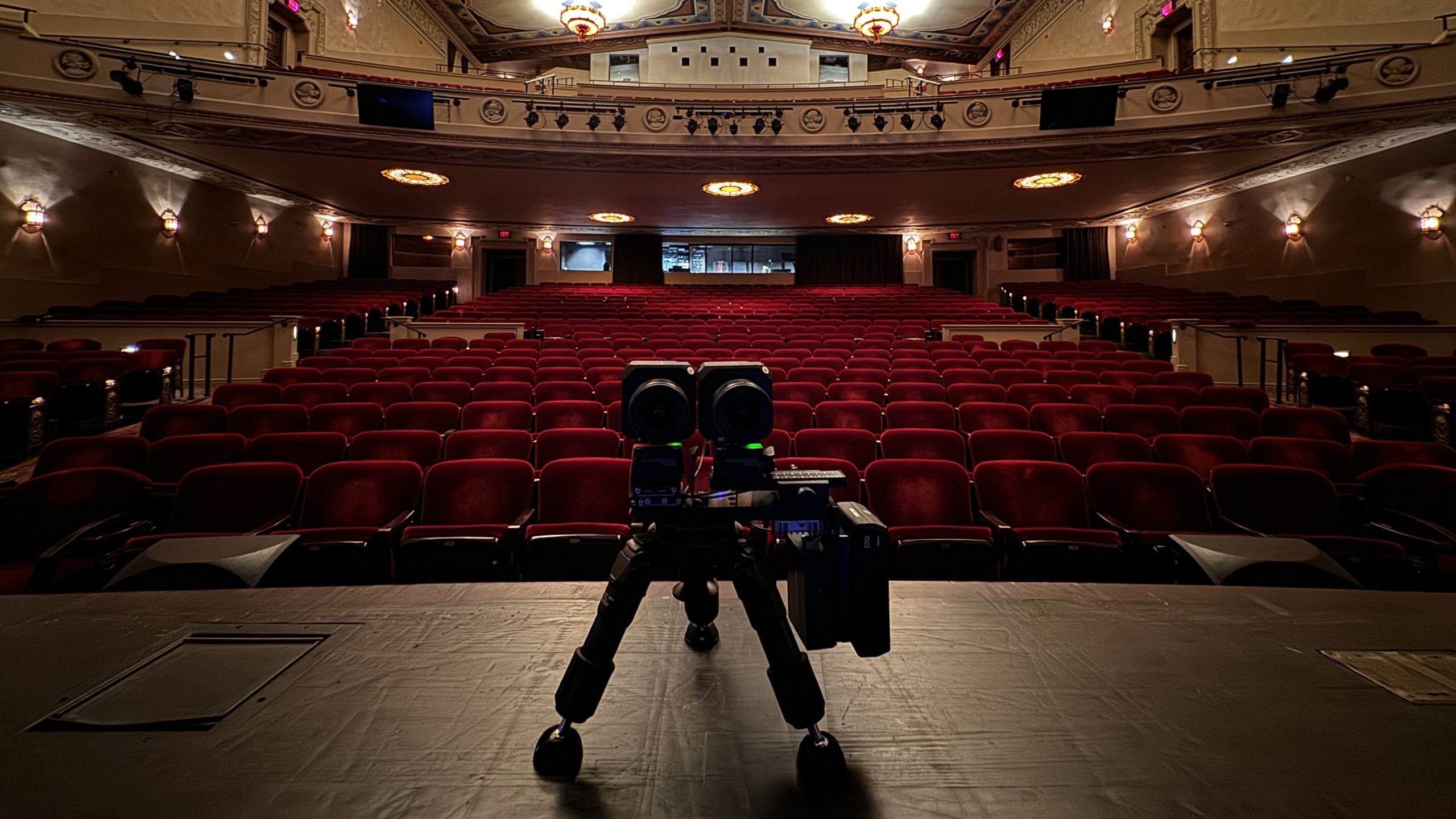
During last week’s WWDC festivities, John Gruber interviewed Apple executives on stage for The Talk Show Live, as he’s done for years. This time it was different because people at home with a Vision Pro could watch the event live from the Theater app by Sandwich Vision, streamed by SpatialGen. (The stream is still available to watch after the fact in the Theater app.)

Sandwich is Adam Lisagor’s media empire specializing in commercial production, and Sandwich Vision is the Vision Pro development arm. I had the chance to talk to Adam, Andy Roth, and Dan Sturm. Andy is the developer for Sandwich Vision’s Television and Theater apps. Dan is the visual effects supervisor for Sandwich.

Disclosure: I am friends with Dan, and have worked for Sandwich as a freelance compositor on some projects, but I am not connected to Television, Theater, or The Talk Show Live in any capacity. The following was lightly edited for clarity and length.

For those that haven’t watched it in a Vision Pro, how would you describe the experience of viewing The Talk Show Live in the Theater app?

Adam: The experience is entirely unique. It’s a blend of different immersive styles and definitions that combine to create a unique kind of immersion that’s more than the sum of its parts.

  • The user is immersed in an immersive space within visionOS (the theater inside the app, surrounded by theater seating, with a sense of scale and perspective—and the equivalent of a 76′ screen in front of them, so it’s the feeling of a typical huge AMC style multiplex theater with few enough cues from lighting, shape, and texture to break the illusion.
  • The user sees a human-scaled “portal” to the stereoscopic capture of humans on a stage, separated forward from the big screen in z-depth about the same distance as the actual humans would be in a real theater environment. So the human scale is immersive, and the stereo capture is immersive.

  • The user hears spatialized audio of the humans on stage combined with the audience captured in a stereo image, creating a sense of immersion in sound within the environment (as well as a sense of place in the community). This is a real psychological effect that happens when a person sits within a large group that’s having a communally similar reaction—we get a sense of overwhelm from the uncommonly emergent scale of the group of which we’re now a member.

  • The user experiences the event in real time, which, in combination with the other immersion styles, is almost never experienced—we watch broadcast TV of live events all the time, but we never experience live events in real time with multiple styles of immersion.

All of this combined leads to a sense of nowness and thereness that is, as some social media users described, “magical.”

Continue reading “How Sandwich streamed The Talk Show Live in 3D on Vision Pro”…


Apple’s planning a cheaper Vision Pro, how we feel about covering CG advertising, managing subscriptions, and our favorite emoji.


Apple’s failures show the limits of its ambition

Apple is a colossus. Some of us might remember back when it was doomed and nearly bankrupt, but these days, it generates hundreds of billions of dollars in revenue every day and has a market capitalization of more than three trillion dollars.

And yet even the most powerful companies are fallible. Often they have a hubris that suggests that their success in one area means they can easily extend it to others—often with disastrous results.

This week, Apple got another reminder that even its mighty power might not be able to make it succeed at all its ambitions. Don’t be embarrassed, Apple — even the world’s most beautiful models still get pimples from time to time.

Continue reading on Macworld ↦


Search Six Colors