Six Colors
Six Colors

Apple, technology, and other stuff

Support this Site

Become a Six Colors member to read exclusive posts, get our weekly podcast, join our community, and more!

by Jason Snell

Joe Steel’s tvOS wish list (2017 edition)

Our pal Joe Steel is back with an updated list of tvOS wishes for WWDC 2017:

The only thing on that list from last year that came to pass was “Darker Interface” in the form of tvOS 11’s Dark Mode. Later in the year, Apple added TV the app but it’s not exactly the overhaul of the TV Shows app and the Movies app I wrote about, nor does it completely satisfy the quick aliases for content that I would have liked. Similarly, Single Sign-On was not the unified iCloud Keychain experience I had hoped for since it relies on a service provider which doesn’t help cord-cutters, and cord-nevers. Purchases of TV apps on other Apple platforms was also made easier in the Fall, but that wasn’t part of WWDC. In January of this year Apple also increased the storage caps on tvOS, which did theoretically differentiate the 32 GB and 64 GB models, but I still haven’t seen any real ramifications of that change.

Joe has been following this area carefully, and his criticisms are detailed and valuable. I enjoy my Apple TV but there’s no doubt that there’s plenty of room for it to improve.


By Dan Moren for Macworld

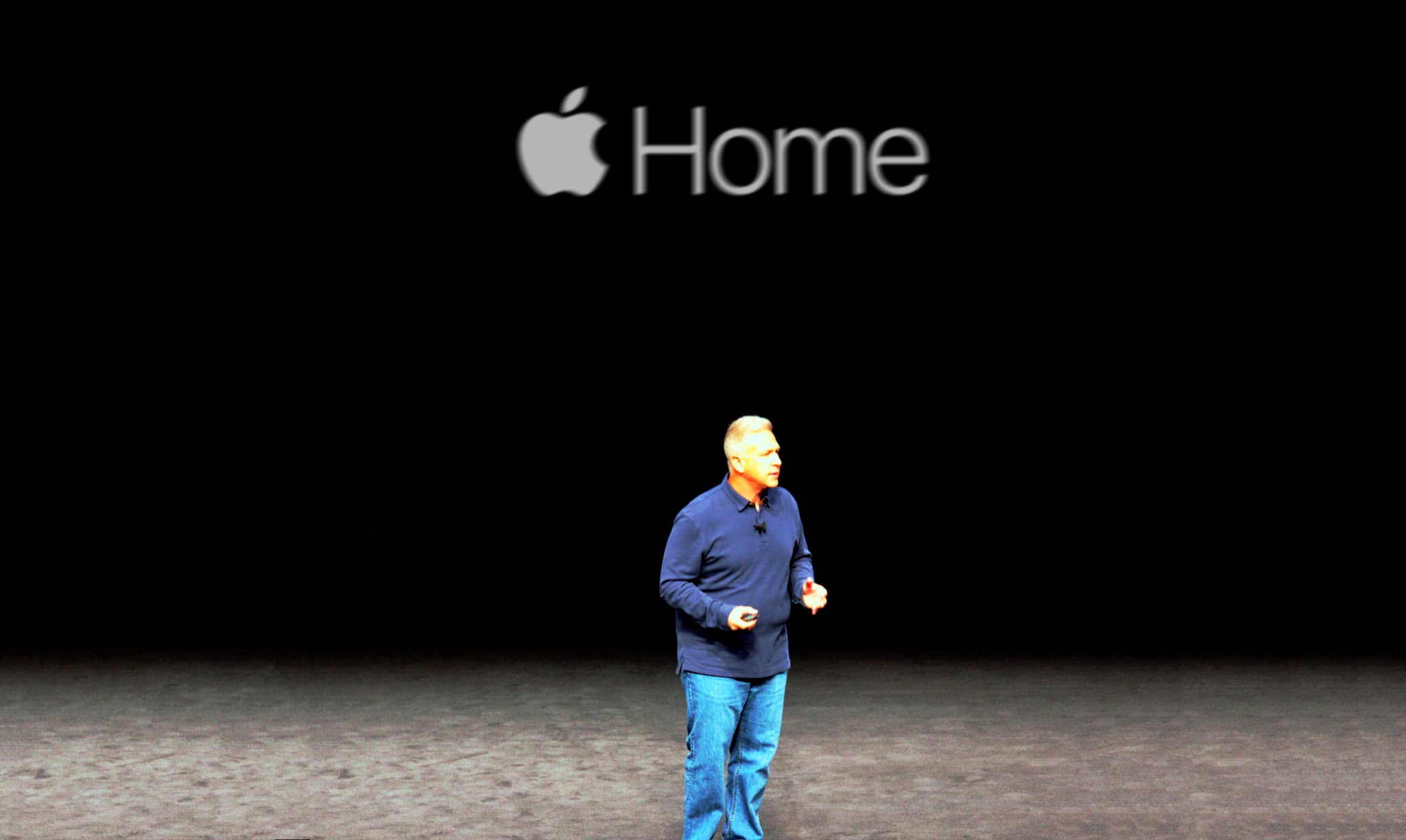
Home is where the HomeKit wants to be

Since it first introduced HomeKit back in 2014, Apple has been dancing around the idea of the smart home and automation. Since then, it’s expanded its offerings bit-by-bit. It added the Home app in 2016, finally putting a front-end interface on controlling smart home tech and adding the ability to use the Apple TV as a home automation hub.

But despite those improvements, HomeKit has yet to really catch on. It’s still missing more than a few pieces, but with the annual Worldwide Developers Conference just over a week away, it’s possible the company has something up its sleeves to finally turn the smart house into a smart home.

Continue reading on Macworld ↦


by Jason Snell

Gem of the solar system

You think you know a planet, and then you send a probe to orbit around its poles and this happens:

“We knew, going in, that Jupiter would throw us some curves,” said Scott Bolton, Juno principal investigator from the Southwest Research Institute in San Antonio. “But now that we are here we are finding that Jupiter can throw the heat, as well as knuckleballs and sliders. There is so much going on here that we didn’t expect that we have had to take a step back and begin to rethink of this as a whole new Jupiter.”

The pictures of Jupiter from Juno, many created and enhanced by citizen scientists, are spectacular. And unlike anything we’ve seen before. As Nadia Drake writes at National Geographic:

“I love the way Jupiter’s poles look in our images—so beautiful and so very different from Saturn,” says Candy Hansen of the Planetary Science Institute. “We are so used to seeing Jupiter’s belts and zones. Not seeing that structure at all at the poles really threw me at first.”

Stormier and more colorful than neighboring Saturn, Jupiter is also so much bigger that it’s possible it’s being shaped by processes that are more star-like than planet-like, Bolton says.

It turns out Jupiter is more than just belts of color and the Great Red Spot. And a lot weirder than we thought.


63: May 25, 2017

Subscriptions and junk phone-calls.


Are new laptops coming at WWDC? https://www.bloomberg.com/news/articles/2017-05-16/apple-said-to-plan-laptop-upgrades-as-microsoft-enters-market
Jason Snell has some thoughts on a Siri speaker: https://sixcolors.com/post/2017/05/imagining-the-introduction-of-a-siri-speaker/
Apple acquired VocalIQ back in October of 2015: https://www.macrumors.com/2015/10/02/apple-acquires-speech-technology-startup-vocaliq/
If you didn’t know, you can pay on your Mac with your finger on your iPhone: https://9to5mac.com/2016/06/13/apple-pay-mac/
Apple’s latest transparency report: https://www.macrumors.com/2017/05/23/apple-2016-government-transparency-report/
How Anker made a great business off Apple and Samsung: https://www.theverge.com/2017/5/22/15673712/anker-battery-charger-amazon-empire-steven-yang-interview
Apple creates a new VP of Diversity: https://9to5mac.com/2017/05/23/apple-denise-young-smith-vp-hr-includsion-diversity/
Lex still doesn’t get Apple’s Today at Apple events: https://www.macrumors.com/2017/05/16/today-at-apple-classes-launch/
Our thanks to Blue Apron (http://blueapron.com/rebound) for sponsoring this episode of The Rebound. Blue Apron ships you ingredients and amazing recipes. Learn while you cook and cook meals you’ll love. Go to BlueApron.com/REBOUND and get three meals FREE with free shipping.
Our thanks also to Mack Weldon (https://www.mackweldon.com/rebound). Mack Weldon makes glorious underwear to hold your bits in the way they deserve, anti-microbially. It is truly awesome stuff. So go to MackWeldon.com/REBOUND and use the promo code “REBOUND” to get 20 percent off your order.
And our thanks to Couchbase (https://www.couchbase.com/therebound). Get exceptional customer experience at any scale on the Couchbase engagement database. Always on, always fast. To find out more, go to Couchbase.com/TheRebound.


Walt Mossberg’s last weekly column

In his final column ahead of his well-earned retirement, The Verge’s Walt Mossberg takes a big picture look at where the technology world is going next, in terms of both its potential benefits and risks:

All of the major tech players, companies from other industries, and startups whose names we don’t know yet are working away on some or all of the new major building blocks of the future. They are: artificial intelligence / machine learning, augmented reality, virtual reality, robotics and drones, smart homes, self-driving cars, and digital health / wearables.

Technology’s changed a lot even in the decade I’ve been covering it, and Mossberg’s been writing weekly columns since 1991. If there’s anybody who’s in a position to take a bird’s-eye view of tech, it’s Uncle Walt. Best of luck to him in his retirement; his presence will certainly be missed.


Readdle adds drag and drop between its apps

In his wish list for iOS 11 last week, Federico Viticci suggested drag-and-drop as a feature that would work well on the iPad, especially in Split Screen mode. Now Readdle, maker of iOS apps like PDF Expert and Documents, has gone ahead and rolled out just such a capability—although only between its own apps.

I haven’t had a chance to ry out the feature firsthand yet, but in its concept videos, such as the one above, it looks pretty impressive. And it certainly seems like evidence that Apple could implement such a feature if it wanted to. Unsurprisingly, Federico has a deep dive on the feature that’s worth checking out as well.


By Dan Moren

Belkin adding HomeKit support via WeMo Bridge

Note: This story has not been updated since 2022.

Belkin WeMo Bridge

Belkin’s WeMo smart home accessories are popular because they’re fairly inexpensive, easy to use, and have been around for a while. But they’ve been missing one significant feature: compatibility with Apple’s HomeKit standard. Belkin initially said that making its existing devices compatible with Apple’s protocol would be impractical, but it appears to have backtracked, announcing today that it will launch a WeMo Bridge in the fall to add HomeKit support to existing and future devices.

The WeMo Bridge is a box that plugs in to your router via Ethernet and translates HomeKit commands into actions that WeMo devices can understand. It works with existing Belkin devices including the Insight Smart Plug (of which I have one), the Light Switch, Dimmer, and the Mini Smart Plug. Pricing has yet to be announced.

This is good news, but I hesitate to be wholehearted in my endorsement. If you have a heavy investment in WeMo devices and have wanted to use them with Siri, then obviously this is probably a worthwhile investment. However, if you only have a few WeMo devices, this becomes a harder sell. For one thing, depending on the price of the WeMo Bridge, it may be less costly to replace existing WeMo devices with HomeKit compatible alternatives.1 For another, who wants another box cluttering up their home–especially one that requires an Ethernet connection?

And there we get into the continued rub of smart home tech. With all these different devices and protocols, having bridges for each of them is just not scalable. I’m already out of Ethernet ports on my router as it is, and routers are shipping with fewer Ethernet ports these days.2

Given the varying standards being pushed, it seems unlikely that any of the companies backing them are going to swallow their pride and give up their own offering to sign on with one of the other major players. Apple, in particular, has–unsurprisingly–pretty strict requirements for HomeKit-compatible devices. To a certain degree, it’s up to the vendors of smart home tech to make their devices compatible with multiple protocols (if they’re interested in appealing to the broadest possible audience, that is). What Belkin’s move does show us is that despite the company’s initial objection that HomeKit support wouldn’t be feasible, there was enough of a potential market there that it ended up being worth the investment.

Of course, this also lends credence to the idea that an Apple home-automation product might be appearing sooner rather than later. It makes sense that companies would want to jump on the HomeKit train before it pulls into the station.


  1. There is some rumbling that there might be a discount for current owners of WeMo devices. 
  2. They’re becoming as scarce a commodity as HDMI ports on a HDTV! 

[Dan Moren is the East Coast Bureau Chief of Six Colors, as well as an author, podcaster, and two-time Jeopardy! champion. You can find him on Mastodon at @dmoren@zeppelin.flights or reach him by email at dan@sixcolors.com. His next novel, the sci-fi adventure Eternity's Tomb, will be released in November 2026.]


By Jason Snell for Macworld

How iCloud Photo Library matches up to Google Photos

Last week at the Google I/O developer conference, Google announced a raft of forthcoming additions to its Google Photos service. Since Google Photos runs on iOS and in any web browser, it’s a serious photo-storage option for Mac, iPhone, and iPad users—and in many ways, it’s way ahead of Apple’s Photos apps and iCloud Photo Library service.

Then again, WWDC—Apple’s own developer conference—is in just two weeks. It’s an opportunity for Apple to declare where it’s taking Photos and iCloud Photo Library next. In the meantime, though, it’s worth pointing out where Google Photos is beating Apple’s offerings, and where Apple’s ahead—and how WWDC could be poised to change both sides of the equation.

Continue reading on Macworld ↦


by Jason Snell

IFTTT gets a little bit more complicated

I’ve complained a lot about IFTTT, a service I use all the time, being a bit too simple for my tastes. There’s been no way to say, for example, “if this and this, then that.” But that’s changing with the introduction of filters in the new IFTTT Makers tier.

I use IFTTT triggers to do things like tie data from my weather station to my dehumidifier, so that I can turn it on when the internal humidity is too high (and off when the moisture has been beaten back down). I also have several triggers for turning my outdoor lights on and off at particular times. I have to create multiple triggers to perform most of these tasks, because each IFTTT rule is itself so dumb.

It looks like I won’t have to anymore. This is great news! IFTTT doesn’t need to be a complex app platform like Zapier, but some added flexibility will help a lot.

[via Myke Hurley via MacStories.]


by Jason Snell

Six Colors sponsorships open for summer

We’re open for Six Colors sponsorships for the summer. As of this writing, WWDC week—sure to be a huge amount of traffic—is still open. Get in touch if you’re interested in that, or any week, this summer.

Six Colors sponsors get a text ad on every page of the site during their week of sponsorship, plus a native post in our RSS feed and a public thank-you post on the site. It’s a pretty good deal, if I do say so myself.


By Dan Moren

Screens 4 for macOS adds drag-and-drop file transfers, curtain mode, more

Note: This story has not been updated for several years.

Edovia’s Screens is one of my must-have utilities on both macOS and iOS. As someone whose household contains three Macs and two iOS devices, I invariably have times where I end up needing to get at something on one of the other devices. (My home server is a Mac mini that’s hooked up to my TV, so I rely on remote access to manage it.)

Screen 4.0 for Mac, which arrived today, brings a couple super handy features, chief among which is the ability to transfer files back and forth by drag-and-drop. That’s a feature that’s been in the mac OS’s own screen-sharing implementation for some time now, but it’s great to finally have it in Screens as well–it certainly makes it easier than having to fire up a separate SFTP session.

Other new additions include Curtain Mode, which allows you to lock out the display on remote Macs so people looking at those machines can’t see what you’re doing; useful if you’re managing a computer in a shared environment. There’s also support for the Touch Bar on the new MacBook Pros, one touch password entry for logins, the ability to create groups of screens, and better support for SSH keys. And Edovia has also added OpenGL support, which improves the speed of rendering those remote displays.

Screens 4 is $29 and available from Edovia’s website, the Mac App Store, and the Setapp subscription service.

[Dan Moren is the East Coast Bureau Chief of Six Colors, as well as an author, podcaster, and two-time Jeopardy! champion. You can find him on Mastodon at @dmoren@zeppelin.flights or reach him by email at dan@sixcolors.com. His next novel, the sci-fi adventure Eternity's Tomb, will be released in November 2026.]


Denise Young Smith is Apple’s Vice President for Inclusion and Diversity

9to5Mac noticed that Denise Young Smith, Apple’s former head of Worldwide Human Resources, has moved jobs to become the company’s Vice President for Inclusion and Diversity:

Smith has been at Apple for over 20 years and was first promoted to VP of worldwide HR back in 2014 from her previous role as head of HR for just Apple’s retail stores, a role that Steve Jobs handpicked her for during the early days of Apple’s retail efforts. She replaced Apple’s then HR head Joel Podolny who switched to focusing full-time on developing Apple University. Prior to that she served as Senior Director of Human Resources for Worldwide Operations and Corporate Employee Relations at Apple from 1997 to 2000.

This is great and hopefully is a step towards Apple improving its diversity record. The bigger change, however, is that unlike previous people to hold this position, Smith will report directly to Tim Cook. That certainly signals that diversity and inclusion are important to the company as a whole–now, let’s see the evidence that it’s improving things.


By Jason Snell

The subscription paradox

Note: This story has not been updated for several years.

When Todd Vaziri recently updated his chart of the length of John Gruber’s The Talk Show—which prompted me to update my chart of The Incomparable’s length—I’ve been reminded of something I learned from my days in the magazine industry. As P.T. Barnum (presumably) said, “Leave them wanting more.”

This isn’t showbiz claptrap—it’s a real effect. What makes someone a happy magazine subscriber, newsletter reader, or television viewer is the feeling that you’re consuming all of something you enjoy. You get to the end and still wish there were more, making you anticipate the next installment.

There are two danger zones. The first is if people just don’t like what you’re making. That’s an obvious one. If they’re not buying what you’re selling, you’ll lose them as a customer, and rightly so.

But then there’s another, less obvious danger zone: People who like your stuff but just can’t finish it all. You’d think that this shouldn’t matter, that if you only ever consume half of everything but enjoy it all, that should be good enough. But it’s not. Most people hate feeling that they’re not using everything they’re paying for. (I know the feeling, at least when it comes to Dropbox storage.)

I’ve had this described to me as “The New Yorker Problem.” People who enjoy reading The New Yorker still cancel their subscriptions, because they’ve got a few issues piled up. When we were designing the digital edition of PCWorld magazine after the print edition shut down, we spent a lot of time debating what the ideal magazine length should be. We could’ve put all the stuff we were generating on the web in there, making it seem like a great value… but it would’ve resulted in enormous issues that few, if any, readers could get through.

I’ve had the same experience with newsletters I’ve subscribed to on the Internet. I get a few daily newsletters, and I like them, but the fact that I just can’t find the time to read every one of them makes me frustrated. Yes, it would literally make me a happier subscriber if they gave me less of what I’m paying for. Any more and it might be the straw that broke the camel’s back.

This may not be entirely logical, but I believe it’s true. And that’s one of the reasons I’ve tried to bend the average run time of The Incomparable, which was at one point threatening to break 90 minutes, back toward an hour. Of course, some people would love it if we’d do two hours every week—but I feel like we’d be risking overstaying our welcome if we did that. I don’t want episodes to pile up. If you get many episodes behind on a podcast, unsubscribing starts to seem like a logical next step.

It’s something for all of us who create things on the Internet to keep in mind: People have a near-infinite supply of content at their disposal now. We should be respectful of their time and always leave them wanting more. There is such a thing as “too much of a good thing.”


62: May 19, 2017

Dumb assistants, smarter iPads, and Apple Park.


MacStories’s iOS 11 wish list and concepts

The ever thorough Federico Viticci has an in-depth rundown of what he’d like to see in iOS 11 on the iPad, complete with an eye-catching concept video:

Even in its apparent simplicity, the Shelf would still be a feature for iPad power-users who want a better way to deal with multiple bits of content. As such, the Shelf would require a specific gesture to be activated when users want to pull content from the Shelf and drop it into an app. In our concept, a three-finger swipe opens the Shelf when an item is not being dragged towards it; this gesture wouldn’t conflict with scrolling in apps, text cursor movement, or Notification Center. When the user has identified an item they need, they can grab it from the Shelf and insert it into a compatible app.

For a moment, I thought to myself that a three-finger swipe is hardly discoverable. Then I reminded myself that that ship sailed when Apple added 3D Touch. Might as well go all in.

Nobody knows the iPad better than Viticci, and his ideas here are pretty well thought out and almost all things I’d be delighted to have: Improved split screen? Multiple audio streams? A unified file-management interface? Sign me up!

Hard as it is to believe, we’re only a few weeks away from seeing what Apple has in store for iOS 11, and I’m sure hoping that it’s a fraction as forward-thinking as what Viticci has concocted.


If Apple announced a Siri-powered home speaker, what might that be like?

By Jason Snell

Imagining the introduction of a “Siri Speaker”

Note: This story has not been updated for several years.

Rumors abound that Apple is working on a new device similar to the Amazon Echo and Google Home—something I’ve been calling the Siri Speaker for the last 14 months.

These rumors come at an interesting time for the ambient home assistant market. The surprising success of the original Amazon Echo has led to an influx of new products, including new Amazon Echo models, the Google Home, and a new Harman Kardon speaker featuring Microsoft’s Cortana assistant.

It’s been clear for a while now that Apple has all the pieces to make a home assistant product if it wanted to—Siri itself, expertise in making audio products from Beats, and a streaming music service in Apple Music. The question was, would Apple do it? And if it did, what choices would it make in fashioning such a product?

With the new rumors that the Siri Speaker might be announced as soon as next month at WWDC, Apple’s developer conference, I’ve started to picture what that announcement might look like. Consider it speculation, analysis, and a little bit of fan fiction all in one…

Continue reading “Imagining the introduction of a “Siri Speaker””…


By Jason Snell for IMore

Championing the Mac Pro

If the mood of the past couple of years of the Mac needed to be summed up in two words, I’d nominate “professional angst.” Lack of updates to the late 2013 Mac Pro and the MacBook Pro caused consternation; the eventual new MacBook Pro release walked into a tough room and failed to impress. Pro users were up in arms, to the point where (after two vain attempts to reassure them through oblique Tim Cook statements) Apple took the unprecedented step of inviting five journalists to Cupertino to acknowledge its mistakes and promise better things in the future for pros.

But what is a pro Mac, really?

Continue reading on IMore ↦


By Dan Moren for Macworld

The computer as an appliance: Moving beyond the Amazon Echo, Google Home, and Siri

Over the past few decades, computing has trended towards the personal. We’ve gone from the age of desktops to the age of laptops to the age of the smartphone. And even though that newfound mobility has brought with it freedom and flexibility, it’s not without its costs.

For one thing, we are, more than ever, entranced with our own personal screens, in the same way that we don our headphones and tune out the world. Computing has become a siloed affair, with each of us involved in our own personalized experiences–even if they connect us with other people across the world, all on their own devices.

But part of me wonders if the pendulum is beginning to swing back to a model where the technology we use at home is linked to a particular location. That’s not to say such a device would supplant the smartphone or tablet, or even the laptop. But maybe the time is finally upon us when the computer becomes a home appliance.

Continue reading on Macworld ↦


Search Six Colors