

By Dan Moren
Don’t call it an iPad
“It’s just a big iPhone.”
A description of the Pro Max? The iPhone 6? The iPhone 6 Plus?
None of the above.
Those old enough—cough, cough—to remember all the way back to 2010’s introduction of the iPad might recall this as a common dismissal of the first generation of Apple’s tablet. Which, to be fair, was kind of just a big iPhone.1 Not that there was anything wrong with that—in fact, it was a pretty successful elevator pitch for an entirely new product category.
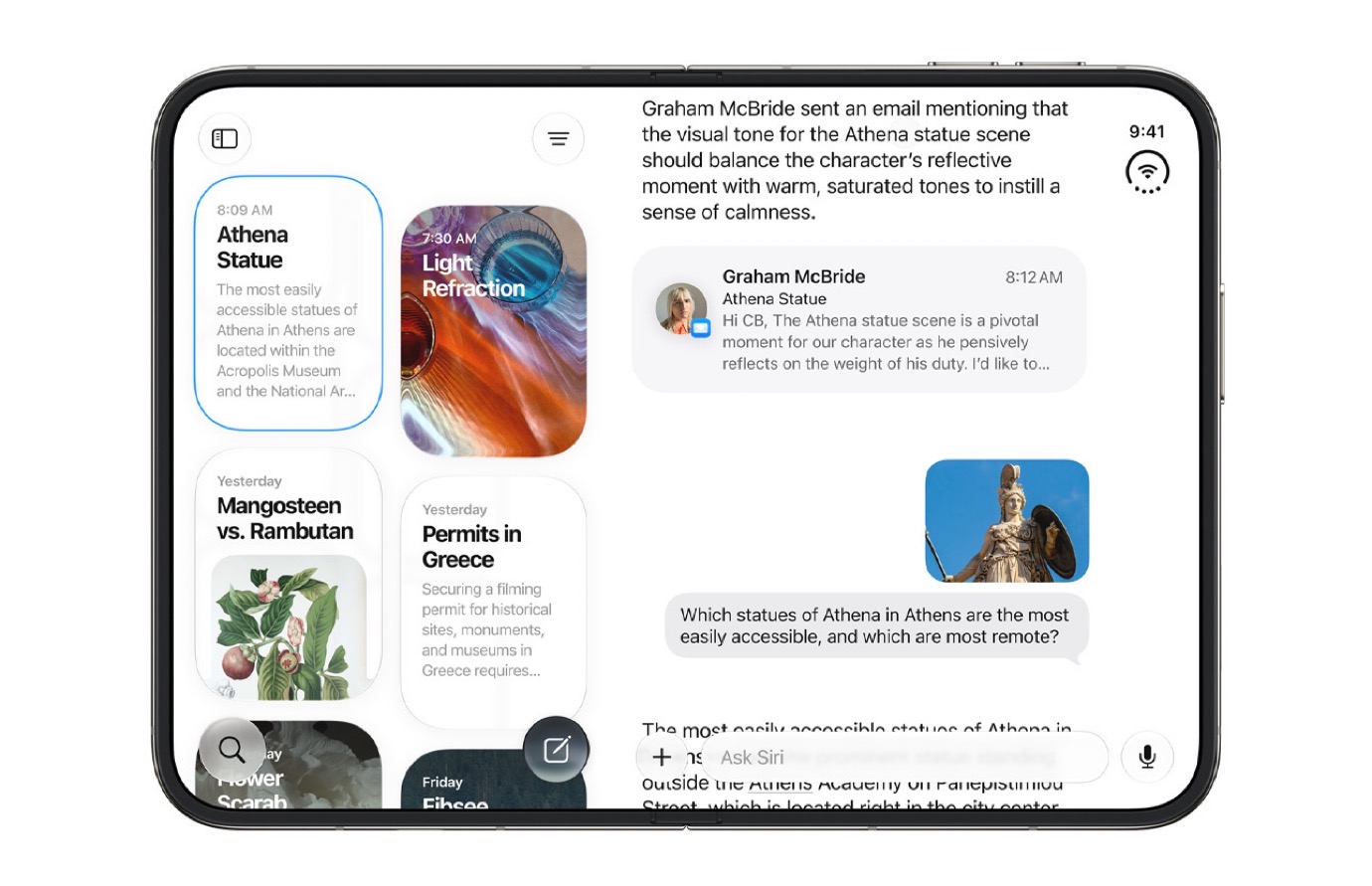
But if you tuned in for Apple’s announcement of the iPhone Duo this week, you may have noticed something curious: Apple only rarely made mention of its very successful tablet line. The company’s view is clear: the iPhone Duo, even when open in all of its glory, may evoke an iPad, but it is very much not an iPad.
No padding
When introducing the device, new CEO John Ternus was clear about the Duo’s heritage:
We started with the experience that we wanted for ourselves, a larger display that feels as natural and intuitive as iPad.
At the risk of sounding like I’m nitpicking, let’s delve into that second clause there. It’s a comparison—it feels like an iPad.
Later on, when industrial design chief Molly Anderson did her best Jony-Ive-esque introduction to the device, she couched it in similar terms:
The two sides connect into a continuous frame, surrounding the largest iPhone display we’ve ever designed. Inspired by the versatility of iPad…
There’s a twofer there: the interior screen is the largest iPhone display, and it’s inspired by the iPad. Again, not an iPad.

There are only two other glancing mentions of the iPad. One when Apple mentions upcoming support for the Apple Pencil—”the first time iPhone offers the great Apple Pencil experience that iPad users love”—and slightly later when it discusses the display: “Drawing on our learnings from iPad and Mac, we developed a custom nanotexture finish…”
And that’s it. Those four mentions of the iPad are all that you’ll hear in the entire event.
Apple’s product page for the Duo takes it even further: the only mention there is about picking up a Siri conversation from your iPad and continuing it on your phone. That’s it.
By comparison, that 2010 introduction of the original iPad? You’ll hear the iPhone mentioned more than 20 times, including about how the iPad runs iPhone apps. That was a lineage that Apple wanted made very clear.
Some room of one’s own
Why am I harping on this?
Because you better believe Apple thoroughly considers its word choice in all of its marketing materials, especially in its most viewed annual event.
Like a lot of Apple product marketing choices, this one is simultaneously surprising and, somehow, obvious. Apple could have described the iPhone Duo as an iPhone that opens into an iPad, leveraging the success of its tablet product line, especially compared to its Android competitors. It might even have helped assuage those concerned about the price tag: yes, it starts at $2000, but you’re getting an iPhone and an iPad in one. What a savings!
But I think Apple was also all too aware that this would be writing checks that it couldn’t cash.2 Because though the iPhone clearly takes cues from the iPad, it is definitively not an iPad. It’s not an iPad that you fold up to put in your pocket. Or an iPad with a little iPhone glued to the front. It’s not running iPadOS. You won’t be installing or running iPad apps.
And, like I said, there’s an obviousness to all of that. Because the iPhone Duo’s screen, large as it is—at 7.6 inches, it’s just .7 inches smaller than the iPad mini—isn’t necessarily ideal for all the features in iPadOS, whether it’s the multitasking windowing system, Slide Over, or even just the menu bar hanging out up at the top of the screen. Having it be an iPhone that works like an iPad when you open it up makes as much—or as little—sense as an iPad that works like an iPhone when you fold it closed.
This distinction also allows it the freedom to do things that the iPad doesn’t. Like the clever ability to pin a video to the top of the screen in portrait. Or being able to fold it and put it on its side for FaceTime calls. The way it shifts user interfaces away from the crease when it’s partially closed. All of these are specific affordances for this device, which helps set it apart from Apple’s other products. Even many of the interface layouts are distinct, like the vertical dock or the minimized status bar.
In some ways the Duo is neither an iPhone nor an iPad, but a third device. But if you’re going to pick one to connect it to, well, why wouldn’t you choose your—if not the—most successful consumer product of all time?
Verging on converging
In the end, the iPhone line is starting to impinge upon the iPad—not unlike the way the iPad itself has begun to blur the lines with the Mac by adding keyboard and trackpad support, windowing, and more.
This isn’t convergence in the way that some have feared, with all of the devices getting squished into a mushy middle ground. Instead, it’s informing each device with what the company has learned from its other products and, in typical Apple fashion, making each product the best version of itself.
Consumers fear convergence, but it’s a risk for Apple too. Because in a world where an iPhone folds out to an iPad, will people really buy both devices? The answer: some may not. But how many of those people were really in the market for an iPad in the first place? Apple is betting that people love their iPhones so much that, just as with the iPhone 6 and the Pro Max lines and even the edge-to-edge displays of the iPhone X and later, that what they really want is an iPhone, but more.
[Dan Moren is the East Coast Bureau Chief of Six Colors, as well as an author, podcaster, and two-time Jeopardy! champion. You can find him on Mastodon at @dmoren@zeppelin.flights or reach him by email at dan@sixcolors.com. His next novel, the sci-fi adventure Eternity's Tomb, will be released in November 2026.]
If you appreciate articles like this one, support us by becoming a Six Colors subscriber. Subscribers get access to an exclusive podcast, members-only stories, and a special community.