

By Dan Moren
September 9, 2026 1:59 PM PT
The iPhone Duo: Tradeoffs, but fewer than feared

Apple’s events are always a deluge of information, delivered by smooth-talking presenters who are probably trying to hypnotize you with their soothing hand motions. So it can take a little bit of time after watching the presentation to come back to reality, and sift through the details.
This year’s iPhone event1 was no exception. The company rolled out new Pro iPhones, two new Apple Watches, a new pair of AirPods, and, of course, the first folding iPhone. Having had a couple of hours to poke around and think about the slew of announcements, I’ve been mulling over the implications of Apple’s newest phone.
One of the biggest questions around the expected folding iPhone, now officially dubbed the Duo, was how much of a trade-off it would be compared to the year’s Pro model iPhones. There was a similar dynamic last year with the iPhone Air, which also offered a novel form factor, though at the cost of the iPhone 17 Pro’s additional cameras and battery life.
In the end, every Apple product—and probably every product—is a story of trade-offs. So, the thinking went, what will we give up to get the benefit of a small iPhone that unfolds into a larger iPhone?
The answer: some things, but less than I’d feared.
Saving face
Perhaps the biggest casualty is Face ID. That’s not really a surprise: it’s an expensive component that takes up valuable space inside the phone chassis, as well as on the screen. Then factor in that the iPhone Duo would probably need two Face ID cameras modules, one each for the exterior and interior screens, and we’re talking double trouble.2
I’ll certainly miss Face ID in the cold New England winter when I don’t want to take off my gloves, but hopefully the Apple Watch unlock will mitigate the frustration.
Camera shy
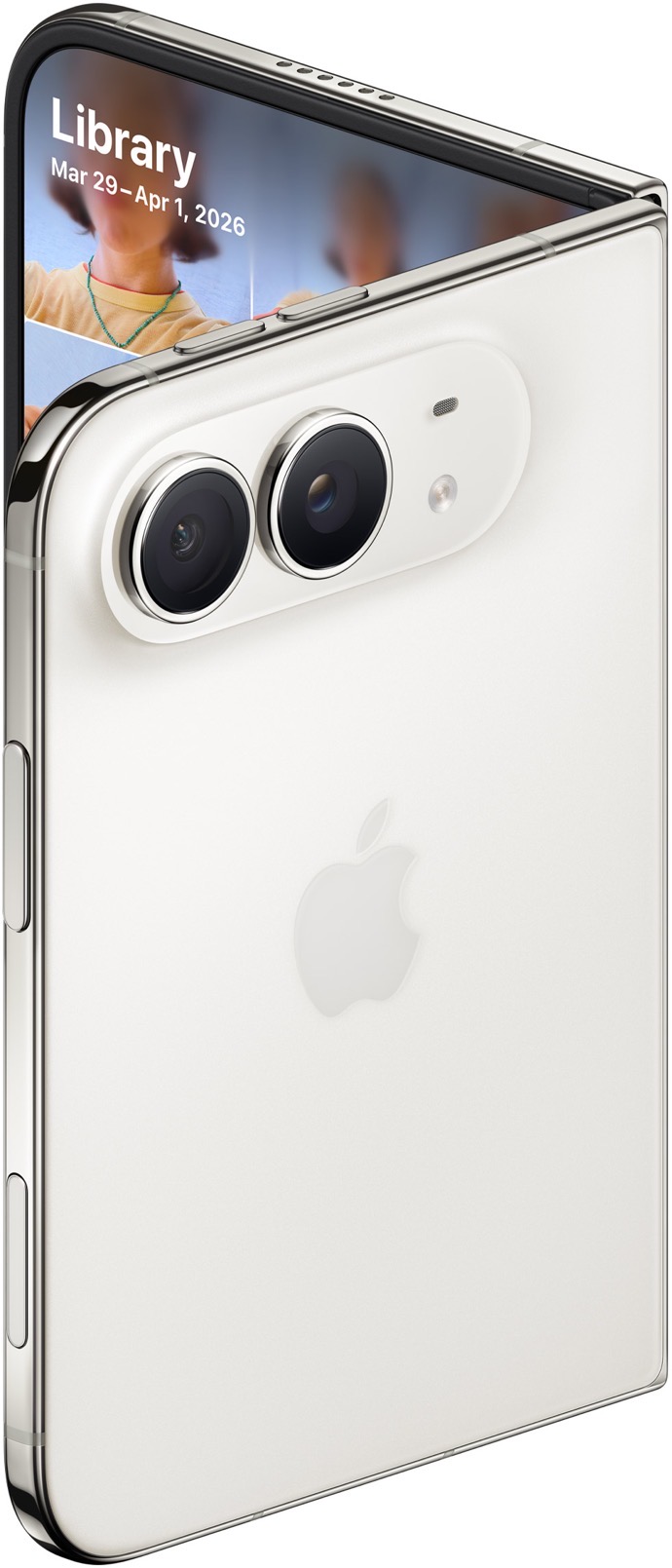
It also seemed a foregone conclusion that at least one of the iPhone Pro’s many cameras wouldn’t make the cut, and sure enough, the Duo lacks the 4x/8x telephoto lens. But it still features the ultrawide lens, which is the better choice, since that also enables macro features. The main 48MP camera also only has Apple’s first-generation sensor-shift optical image stabilization, compared to the second-generation tech on the 17 Pro and 18 Pro.
The Duo’s dual screens also raise questions about the front-facing cameras. While both its interior and exterior selfie cameras are capable of Center Stage and can flip between landscape and portrait at the touch of a control, neither is as good quality as the front-facing camera on the Pro models.
The 18 Pro, like the 17 line before it, boasts a hefty 18MP sensor; the iPhone Duo’s exterior camera, by comparison, is just 12MP. As for the interior screen’s camera, which is the first one that Apple has tucked under the display, the current specs say only that it records video at 1080p. The exterior front-facing camera also doesn’t support the new smart focus tracking feature the company announced for the 18 Pro (which does support it on both front and rear-facing cameras).
Unsurprisingly, the Duo also lacks several of the Pro models more, well, pro features. You won’t find support for ProRes or ProRes RAW, ACES, Apple Log 2, and Genlock. In other words, Apple’s probably not shooting its next event on a bunch of iPhone Duos because that would be ridiculously unnecessary flex unless they’ve got a whole bunch of extras lying around. The Duo also doesn’t shoot spatial video, probably due to the horizontal rather than vertical side-by-side camera arrangement. I’m sure there are dozens of people who will be upset.
Lights, camera, no action?
The Duo’s other casualties seem to mostly have succumbed to the one-two combo of high cost and low return. For example, few will likely shed tears on the lack of the LiDAR sensor.
There may be more complaints, however about the lack of the Action Button first included with the iPhone 15 Pro. That’s a bummer for folks who enjoyed the customization of the hardware button, but again an understandable absence. However, the Duo does, to my surprise, have Apple’s Camera Control button for quickly launching the camera and taking photos.
MagSafe and sound
Some were worried, given its lack of mention in the Apple event, that the iPhone Duo eschewed MagSafe, not unlike the oddity that was the iPhone 16e. But the good news is that MagSafe is apparently considered critical enough to merit its inclusion on the Duo.
However it’s not without an asterisk. Unlike other iPhones which Apple says “Compatible with MagSafe cases, wallets, wireless chargers, and more” the Duo’s says only “Compatible with MagSafe cases, wireless chargers, and more.” Note the difference? That’s right, the iPhone Duo just stole your wallet—in more ways than one.
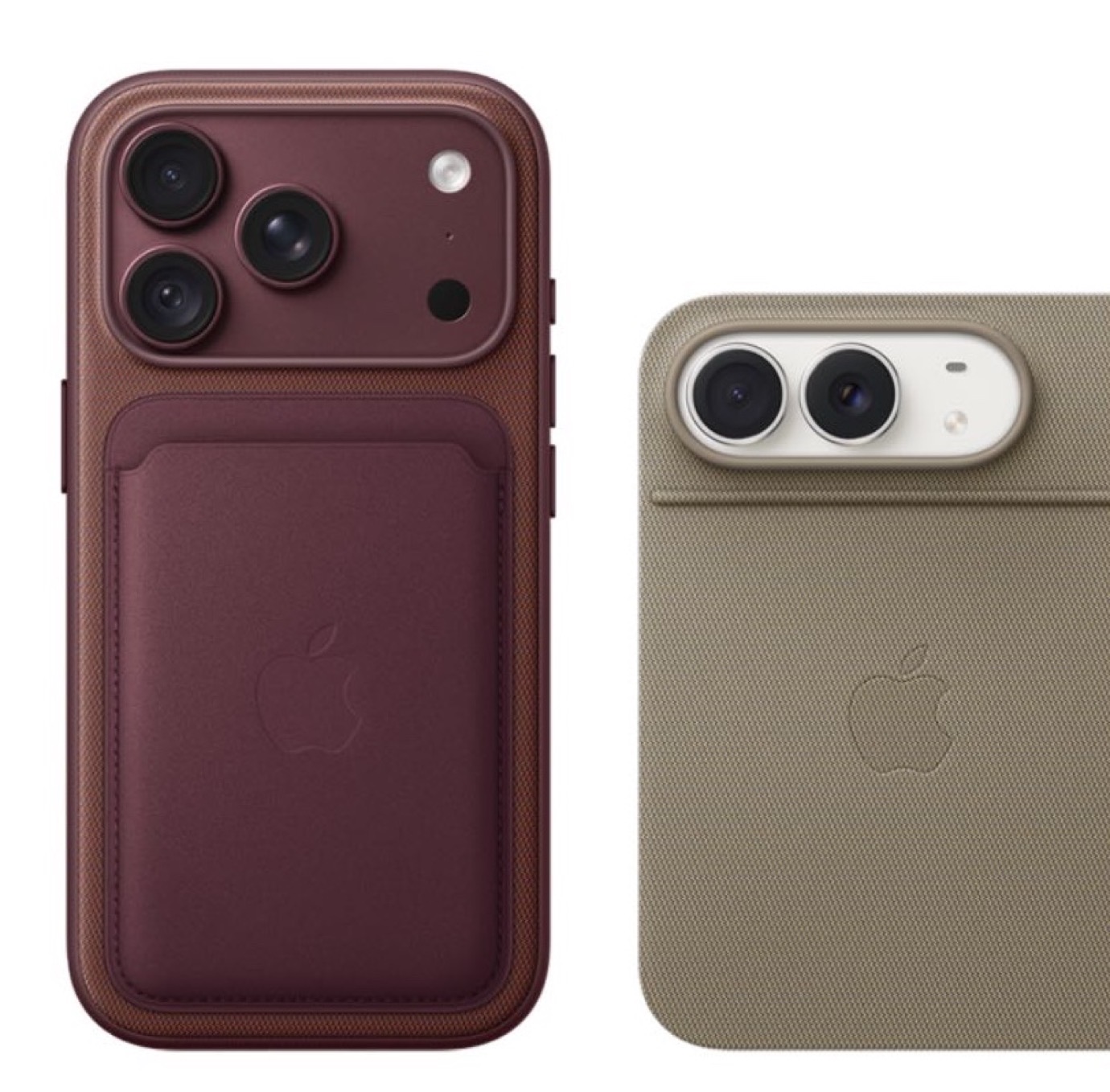
But this one’s just a matter of space, as an image from Apple’s accessories page clearly illustrates: Apple’s MagSafe wallet simply won’t fit on the shorter, squatter Duo. Will that stop someone somewhere from making a Duo compatible wallet? You might struggle to fit your credit cards, but I wouldn’t bet against it.
And because I really need something audio-related to justify this section header, in a blow to podcasters everywhere, the Duo does not have the much vaunted “studio-quality” four-mic array of the Pro models. I’ll pour one out.3
Size matters
I’ll leave you with this last thought, which amused me. Apple touted that, when open, the iPhone Duo is the thinnest iPhone ever at just 5.2mm, dethroning last year’s record-setting iPhone Air with its bulky 5.64mm thickness.
However, when folded, the Duo is itself a chunky 11.3mm. I found myself wondering if that was, in turn, the thickest iPhone ever. The answer? Just barely not. But you have to go all the way back to 2009’s iPhone 3GS, which—like its predecessor, the iPhone 3G—rang in at 12.3mm, in large part due to its slightly convex back.4
The thinnest iPhone ever and the thickest iPhone in 17 years. Something for everyone!
- Or, I guess I should say, “some iPhones” event, as we’ll likely see the iPhone 18 and Air 2 next spring. ↩
- And before you fire up your email to say that they could have just put it in one of them, well, would that really be a better experience if you only get Face ID half the time? What would you do for the rest? Make people enter a passcode? Have both Face ID and Touch ID? At that point, far simpler—and, again, cheaper—to ditch it. ↩
- And because I know someone will ask: the original iPhone was slightly thinner, thanks to its flat rear case, at “just” 11.6mm—just a hair thicker than the folded iPhone Duo. ↩
[Dan Moren is the East Coast Bureau Chief of Six Colors, as well as an author, podcaster, and two-time Jeopardy! champion. You can find him on Mastodon at @dmoren@zeppelin.flights or reach him by email at dan@sixcolors.com. His next novel, the sci-fi adventure Eternity's Tomb, will be released in November 2026.]
If you appreciate articles like this one, support us by becoming a Six Colors subscriber. Subscribers get access to an exclusive podcast, members-only stories, and a special community.